To move an injection molding machine, purge the barrel, drain the hydraulic oil and water lines, disconnect utilities, and fit the OEM transport locks that hold the platens and toggle. Large machines split into clamp and injection units. Riggers jack and skid the base on its designated points — never the tie bars — then level the machine at the new plant to the platen parallelism the OEM specifies.
An injection molding machine looks like one solid block of steel on a base, and that is exactly why they get moved badly. What is actually sitting there is a precision clamp assembly — two or more platens riding on ground tie bars — bolted to a frame that is holding everything in alignment. Rack that frame on a forklift, or set it down on a floor that is out by a quarter inch across the base, and the machine will still run. It will just start flashing parts, wearing one tie bar faster than the other three, and eventually snapping one.
The move itself is routine work for a rigging crew. The alignment either side of it is what decides whether the press makes good parts on Monday.
How much does an injection molding machine weigh?
Far more than the number on the nameplate suggests, because that number is clamp force, not weight. A machine described as a 500-ton press is rated to hold 500 tons of clamping force on the mold — it does not weigh 500 tons. As a rough working range, small presses under 100 tons of clamp run a few thousand pounds; mid-range machines in the 200 to 500 ton class run from roughly 15,000 to 50,000 pounds; and large two-platen machines above 1,000 tons get into six figures of pounds and ship in pieces.
Get the real number from the OEM manual or the machine plate before anything is planned, along with the center of gravity. A molding machine is not balanced — the clamp end is much heavier than the injection end, and the whole mass sits low and long. That weight distribution is what the rigging plan is built around, and it is the reason a machine that fits on paper still tips a forklift.
What has to happen before the machine can be unbolted?
All of this belongs to the plant and the process technicians, not the riggers, and all of it has to be finished before the crew arrives:
- Purge the barrel and pull the mold. Purge out the running resin, especially anything corrosive or filled. The mold comes off and travels as its own item, racked and strapped, with the faces protected and rust-preventive applied.
- Drain the hydraulics. A hydraulic machine's reservoir can hold hundreds of gallons of oil. Draining it removes a spill risk, removes sloshing mass in transit, and removes the argument about who cleans the trailer. Cap every hose and port. All-electric machines carry far less oil but still have lubrication circuits.
- Blow out the water. Barrel throat cooling, mold cooling manifolds, oil coolers and the hoses to the chiller all hold water. Anything moving in winter gets blown dry.
- Discharge the accumulator. Accumulators on the clamp or injection circuit hold a nitrogen charge. It comes down before disassembly, by someone who does that work.
- Disconnect the utilities. A licensed electrician disconnects the main power feed — these are three-phase machines with a serious supply — plus compressed air, water and any resin conveying lines.
- Fit the transport locks. Almost every OEM ships shipping brackets or transport bars that hold the moving platen, the toggle and the injection carriage from travelling. If the plant still has them, use them. If not, the crew blocks and braces those assemblies before anything moves.
Do you have to split the clamp and injection units?
On small and mid-range machines, no — the press goes as one piece on its base, and that is the preferred way because nothing has to be realigned afterward. Splitting starts to make sense when the machine will not fit through the opening, will not make a turn, will not carry legally in one piece, or is simply built to ship in sections.
When it does split, the injection unit comes off first: nozzle, then the barrel and screw on larger machines where the barrel is its own lift, then the carriage. Barrel heater bands and thermocouples are fragile and expensive; they get removed or padded, and the leads are labelled before anything is unplugged. Large two-platen machines separate further, with the stationary platen, moving platen and tie bars handled as their own items. Every one of those interfaces is a machined fit, so it gets protected, and the hardware goes back in the same holes — bagged, labelled and taped to the part it came off.
Photograph everything before it comes apart. The single most common cause of a slow restart is not damage; it is a hose or a lead nobody can place four weeks later.
How is a molding machine rigged out of a plant?
From underneath, on the base, at the points the manufacturer designates. That is the whole rule, and the rest is method.
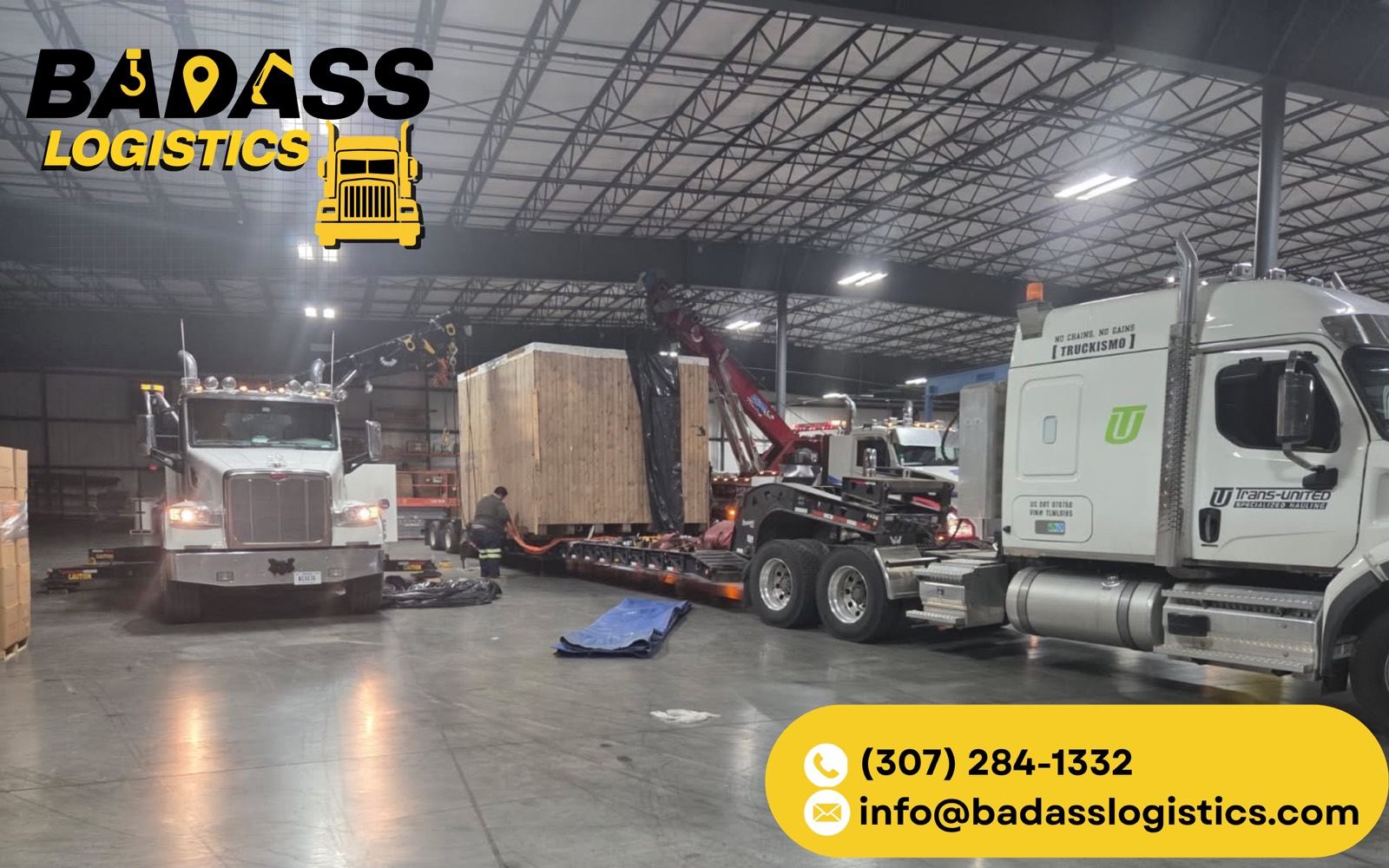
Most presses come off their leveling pads on toe jacks and go onto machinery skates, then get walked out on plate — the same jacking and skidding technique that moves any long, low, heavy machine through a plant without a crane. Where a forklift is used, it goes under the base at the OEM's fork pockets or lifting lugs only, and the load-center math gets done honestly, because a molding machine's mass sits a long way out from the carriage. Where the machine has to come up and over something, a gantry over the top picks from the designated lifting points with a spreader, so the slings pull vertically rather than squeezing the frame.
The things that must never take the load: the tie bars, the platens, the injection unit, the guarding, the operator panel arm, and the hopper. Tie bars in particular are ground, hardened and pre-stressed. A sling choked around one is not a shortcut, it is a scrapped machine.
What the site walk has to capture
- Machine weight and center of gravity from the manual, not the clamp tonnage
- OEM lifting and jacking points, and whether transport brackets still exist
- Overall length with the injection unit fully back, and height with the hopper off
- Door and aisle widths, turning radius, and anything overhead on the route
- Floor slab thickness and condition on the path, and any pits or trenches to plate
- Dock height, or whether the load-out needs a crane pick outside
- At the new plant: slab capacity, power, water, air, and the drop zone for auxiliaries
What happens to the dryers, chillers and robots?
They are usually half the job and they are usually forgotten in the plan. A molding cell is the press plus a hopper loader, a desiccant dryer, a mold temperature controller or two, a chiller, a granulator, a parts conveyor, and often a top-entry beam robot. The robot is the sensitive one: the beam is aligned to the machine, so it comes off as an assembly, travels braced, and gets re-aligned and re-taught at the new plant. Everything else moves as ordinary machinery moving work, but the sequence matters — auxiliaries land first so the press is not blocked in by its own support equipment.
How is an injection molding machine shipped?
Blocked, braced and strapped to the base, with every moving assembly locked. The machine sits on dunnage that supports the frame along its length rather than at two points, because a long base bridging across two blocks will flex. The moving platen and toggle stay locked; the injection carriage stays locked; the barrel, if it travelled separately, is cradled and cannot roll.
Machined surfaces get rust preventive and wrap, and anything with electronics — the control cabinet, the operator panel, servo drives — is protected from water. Most presses ship open on a deck; sensitive machines, long storage or ocean freight means a crate and a desiccant, which is its own set of requirements. Transport between sites is arranged through our licensed broker and carrier partners, with the route checked against the machine's real height and length rather than the brochure's.
How is the machine leveled and set at the new plant?
This is the part that decides whether the move worked. The press goes onto its leveling pads on a slab that can actually carry it, and then it gets leveled to the OEM's specification — usually a tight tolerance across both axes of the base, checked with a precision level, and adjusted pad by pad so the load is shared rather than sitting on two corners.
Level is not the goal, though. Platen parallelism is. The base is leveled so that the stationary and moving platens sit parallel to each other within the manufacturer's tolerance, and that is what gets verified before the machine is signed off — on larger presses by measuring across the tie bars, and in practice by confirming the clamp closes evenly. A press sitting on a twisted base loads its tie bars unevenly, and the symptoms are the classic ones: flash on one side of the part, mold wear that is worse at one corner, and a tie bar that eventually fails. The leveling and alignment step is also where millwright work takes over from rigging — anchoring where the machine calls for it, reconnecting water and air, and turning the machine over dry before resin goes near it.
What goes wrong most often?
Four things, in this order. Lifting on the tie bars or platens instead of the base. Skipping the transport locks, so the moving platen travels and takes the toggle with it. Leaving the oil in, then discovering what a few hundred gallons does to a trailer on a highway ramp. And rushing the level at the far end, which is the one nobody notices until the first production run is flashing. Every one of them is cheaper to avoid on the site walk than to fix afterward — which is the same lesson as every other plant relocation.
Bottom line
- Clamp tonnage is not weight. Get the real weight and the center of gravity from the manual.
- Purge, drain the oil, blow out the water and discharge the accumulator before the crew arrives.
- Fit the OEM transport locks, or block and brace the platens, toggle and carriage.
- Lift and jack on the base at designated points only — never the tie bars.
- Level to platen parallelism, not just to a bubble, or the press flashes parts.
Moving a press, a cell, or a whole molding floor? That is core machinery moving and millwright work, and the cost drivers are the same ones covered in what machinery movers charge for. Send the machine list with tonnages and the route out of the building and we will build the plan — start here.