A comparable plant relocation quote needs the same inputs from every bidder: a full asset list with weights, dimensions and utilities, exit and receiving-site access, the required production restart date, and a clear scope split on disconnect and reconnect. Have that survey done before you request one. A process plant — piping, tanks, skidded equipment, live utilities — needs a shutdown-sequenced plan a discrete-manufacturing quote does not.
Relocating a plant is not one heroic heavy lift — it is dozens of moves in the right order, run so the business loses as little production as possible. The machines are the easy part. The hard part is sequencing: what comes down first, what ships when, and what has to be running again by Monday. A plant relocation quote is a promise to manage that sequencing, and it is only as reliable as what the requesting company hands over before asking for a number. Here is the checklist we work from — starting with the quote itself.
What does a plant relocation quote need to include to be comparable?
Two quotes for the same relocation are only comparable if they were built on the same inputs and cover the same scope. At minimum, a quote worth comparing states:
- The asset list it priced against — how many machines, their weights and dimensions, and whether that came from a real survey or an estimate from a floor plan.
- What's in scope and what isn't. Rigging and transport only, or does the number also cover disconnect, reconnect, leveling, and recommissioning? A cheaper quote that excludes reconnection is not actually cheaper.
- The access and site conditions it assumes — exit path at the old site, receiving-dock and floor-loading conditions at the new one, and whether a crane pick is assumed anywhere in the route.
- The production restart date it's built around. A quote that doesn't reference your downtime window wasn't built as a sequencing plan — it was priced as a generic haul.
- Who is responsible for OEM disconnect and reconnect on equipment where that has to be a manufacturer or authorized technician, and how that work is coordinated against the freight and rigging schedule.
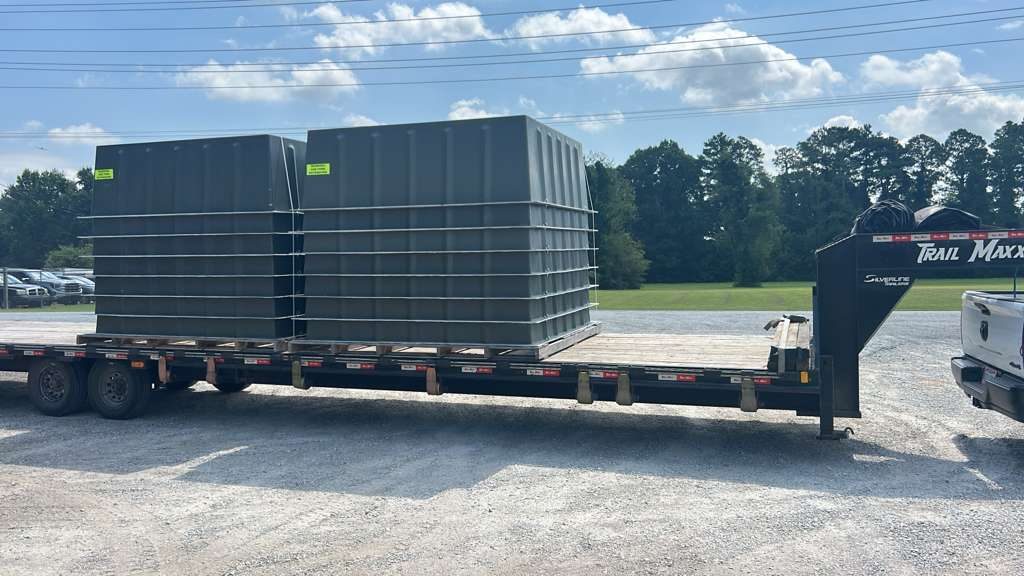
- The trailer and equipment assumptions behind the number — flatbed or step-deck for heavy iron, enclosed air-ride for anything precision, and how many loads that implies.
If a quote is silent on any of these, it isn't wrong — it's incomplete, and an incomplete quote can't be weighed fairly against one that spells all of it out.
What should you have ready before requesting a quote?
The single biggest driver of quote accuracy is whether the requesting company can hand over a real survey instead of a guess. Before asking for a number, have on hand:
- An asset list with weight, footprint, and utility connections (power, air, water, data, process lines) for every machine moving.
- Current and new floor plans, with each asset mapped to where it lands at the new site.
- Access measurements at both ends — doorways, aisles, dock heights, floor load ratings, and any freight elevator or ramp the load has to pass through.
- The required production restart date, or the downtime window the business can actually absorb.
- Clarity on who handles disconnect and reconnect — in-house maintenance, the equipment OEM, or the relocation crew — for at least the equipment that's warranty-sensitive.
- Site readiness at the destination — are pads, foundations, and utilities already live, or does the schedule depend on construction finishing on time?
A company that can hand over this list gets quotes back that are close to the final number. A company that can't gets estimates with wide contingency built in, because the estimator is pricing the unknowns along with the move.
What makes a plant relocation quote unreliable?
A few patterns show up consistently in quotes that don't hold up once the move starts:
- No site walk and no asset list behind it. A number built off a square-footage figure or a phone description is a guess with a price attached, not an estimate.
- A flat per-load or per-mile rate with no sequencing behind it. A relocation with forty machines and a tight downtime window is a scheduling problem with rigging jobs inside it — a rate that only prices the rigging is missing the part that actually drives cost.
- Scope that's undefined. If the quote doesn't say whether disconnect, reconnect, and leveling are included, assume they aren't, and get that in writing before comparing it to a number that does include them.
- No allowance for what's actually being moved. A quote for a process plant that reads identically to a quote for a discrete-manufacturing plant — same line items, same generic language — usually means the estimator didn't account for what's different about a process facility (below).
1. Survey and tag every asset
Before anything moves, the facility gets walked and inventoried: every machine, its weight and dimensions, its utilities (power, air, water, data), and its condition. Each asset is tagged and mapped to a spot on the new floor plan. This is also where the exit path for each machine gets measured — doorways, aisles, docks, floor ratings.
2. Sequence the move around production
This is where a plant move is won or lost. The schedule is built backward from production: whatever needs to be running first at the new site is planned to arrive and be set first, which often means it is the last thing shut down at the old site. Non-critical and warehouse items move first as a dry run; the production line moves in a tight, staged window.
3. Disconnect and prep
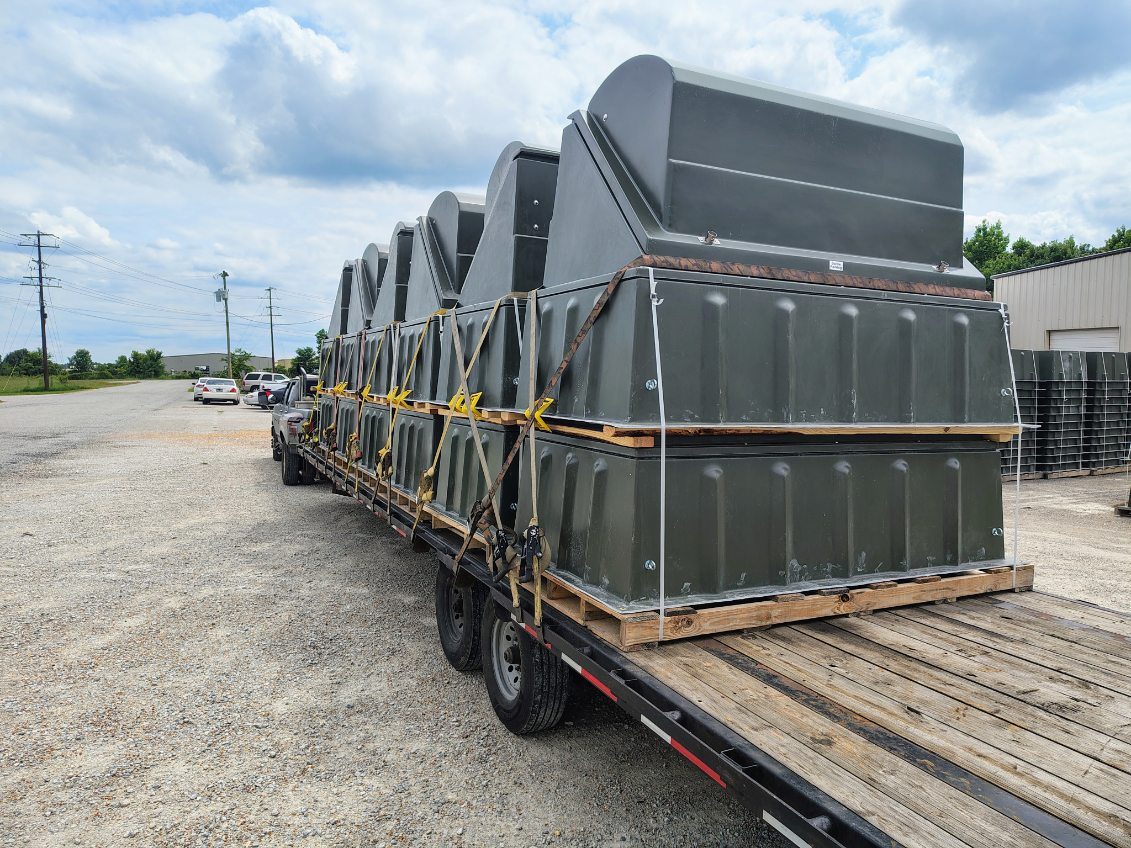
Machines get powered down, locked out, drained, and disconnected from utilities — often with the plant's maintenance team or the OEM handling the technical side. Axes are retracted, shipping brackets set, controls protected, and everything labeled to match the new floor plan so reconnection is not a guessing game.
4. Rig, load, and transport
Each machine is rigged out along its surveyed path and loaded on the right trailer for its size and sensitivity — flatbed or step-deck for the heavy iron, enclosed air-ride for anything precision or delicate. Loads run as project freight — often on dedicated lanes for the length of the move. The convoy is sequenced so machines arrive in install order, not in a pile.
5. Set, level, and recommission
At the new site, machines are rigged into place, set on their pads, and leveled to spec, then reconnected to utilities and recommissioned in production order. The goal the whole way through: the line comes back up on schedule, not "eventually."
How is a process plant relocation different from a discrete-manufacturing move?
The checklist above applies to both, but a process plant — chemical, food, pharma, or any facility built around continuous flow through piping, tanks, and skidded process units — adds work at almost every step that a discrete-manufacturing plant moving individual machines and workstations doesn't carry:
- Piping is part of the asset list, not just the machines. Process piping has to be tagged, matched to isometric drawings, drained, and often cut and flanged at defined points rather than simply unbolted. Reconnection depends on those tags matching the drawings at the new site — mislabeled piping is one of the most common causes of a slow restart.
- Tanks and vessels have to be drained and purged before they move, and depending on what they held, that can mean a cleaning or inerting step that a discrete-manufacturing move never encounters. This has to be scheduled into the sequence, not treated as a disconnect formality.
- Skidded process equipment moves as a unit. Skid-mounted packages — reactors, pumps, heat exchangers, control panels on a common frame — are rigged and shipped as an assembly to preserve the alignment between components. Breaking a skid apart to move it piece by piece usually costs more in re-commissioning than it saves in transport.
- Utility tie-ins go beyond power. A discrete-manufacturing quote is mostly about electrical and maybe compressed air. A process plant quote has to account for steam, process gas, chemical feed lines, and instrumentation air — utilities that plant engineering, not just facilities staff, has to sign off on at both ends.
- Sequencing is built around a shutdown or turnaround window, not just off-hours. Process lines are often interdependent in ways a row of standalone machines isn't — one unit down can mean the whole line is down — so the survey has to map those dependencies before the sequence is set, and the receiving site's utility tie-ins need to be live and tested before startup, not just its floor space ready.
A quote that doesn't distinguish between these two kinds of facilities is a sign the estimator priced the move as generic rigging and haul rather than as the plant it actually is.
The checklist, condensed
- A comparable quote states its asset list, scope, access assumptions, restart date, and disconnect/reconnect ownership.
- Have a real survey, floor plans, access measurements, and a restart date ready before requesting quotes.
- Survey, weigh, and tag every asset; map it to the new floor plan.
- Sequence backward from production — last out is first back online.
- Disconnect and label so reconnection is not guesswork.
- Match each machine to the right trailer; sequence the freight in install order.
- Set, level to spec, reconnect, and recommission in order.
- Process plants add piping, tank draining, skid handling, and utility tie-ins a discrete-manufacturing move doesn't carry.
Planning a move? Our plant relocation and machinery moving crews handle the survey, the sequence, the rigging, and the transport as one project. Send us your asset list and both floor plans and we will build the move plan.