Every accuracy spec on a machine tool assumes the casting is leveled to the builder's installation spec. After a move, twist in the base shows up as taper, out-of-round bores, and lost squareness. Re-level on the correct pads with a precision level, respect the foundation and settling time, then prove the machine with a test cut before releasing production.
A machine that held tenths at the old plant and can't hold two thou at the new one usually isn't damaged. It's twisted. Machine tools are built on one quiet assumption: the casting sits the way the builder's assembly floor had it — ways scraped, gibs fitted, squareness verified with the bed dead level. Set that same casting on a slab that's off across the footprint and you've changed the machine's geometry without touching a single component.
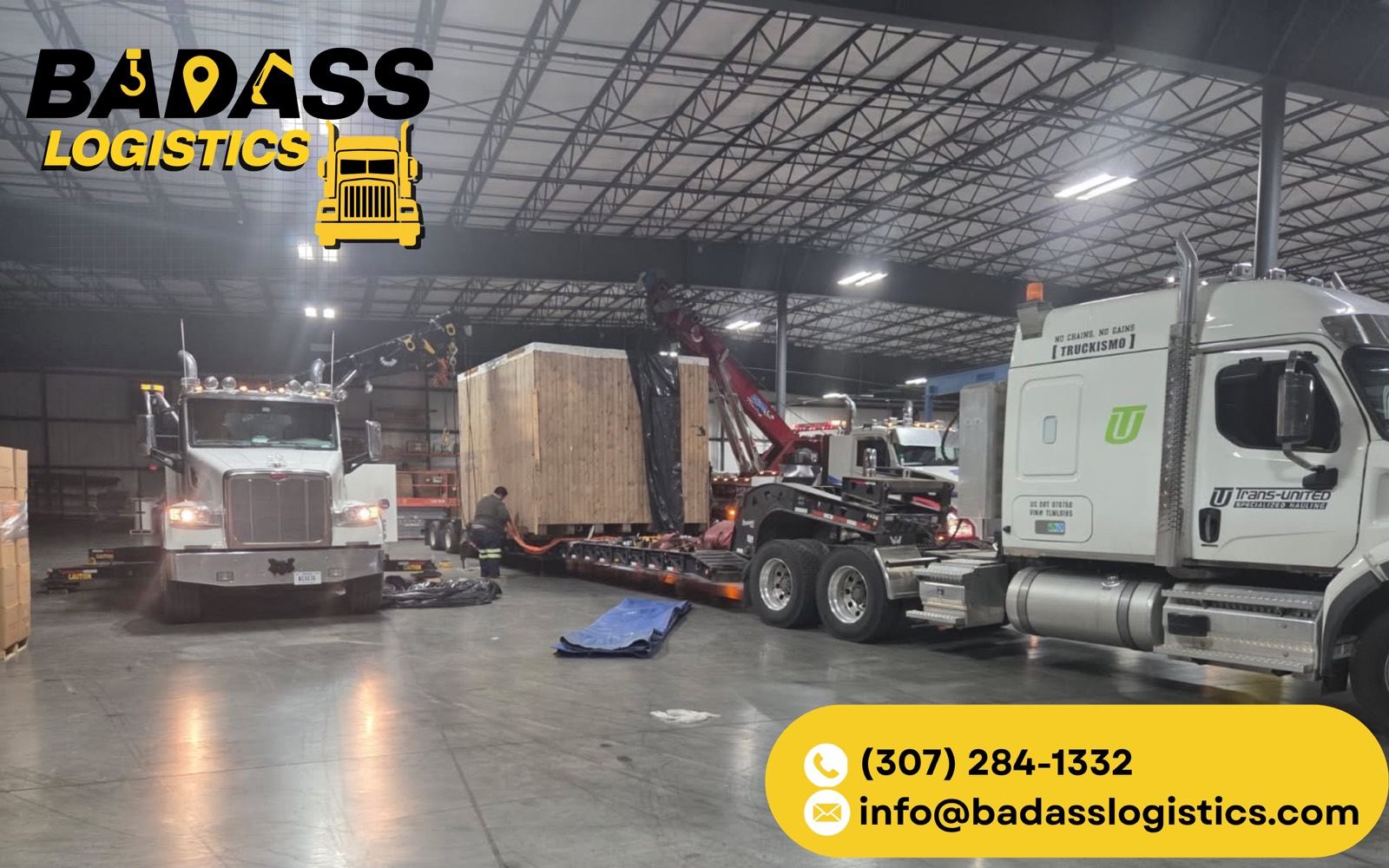
From the dispatch desk, leveling is the handoff. Our job on a machinery moving project is to land the machine on its marks, on the correct pads, over a floor that can carry it. Your millwright or the OEM tech brings it back to spec. Here's why that second half decides whether the move actually worked.
Geometry starts with a level casting
Every number on the builder's accuracy sheet — positioning, repeatability, circularity, squareness — was measured with the machine leveled per the installation manual. Level isn't about gravity or coolant drainage. It's the reference state for the entire geometry stack: twist the base and the ways twist with it, and everything riding on those ways inherits the error.
The symptoms are predictable. A lathe bed with twist cuts taper — the classic two-collar test bar mics fat on one end no matter how good the operator is. A machining center with a racked base loses squareness between axes, so circular interpolation turns bores into subtle ovals; a ballbar plot shows it as a tilted ellipse long before the CMM flags a bad part. Positioning accuracy goes with it, because the scales and screws are now measuring travel along a bent reference.
Feet, pads, and what carries the weight
How the machine meets the floor matters as much as where. Builders specify the support system for a reason:
- Three-point mounts self-define a plane — the machine can sit out of level, but the floor can't twist it. Common on smaller, stiff-casting machines.
- Multi-point jack screws and wedge pads are the opposite case. On a long-bed lathe or grinder with ten or twelve support points, twist gets dialed in or out one foot at a time, following the builder's sequence and load pattern.
- Isolation pads are spec'd for the machine's weight and vibration profile. Soft rubber under a machine the builder wants on steel wedges will let it walk out of level as it runs.
Reusing whatever the machine sat on at the old plant is a gamble. Pads take a set, wedges disappear during teardown, and the new slab is not the old slab.
The level itself
A carpenter's level has no business near this work. Precision machinist levels are graduated in fractions of a thousandth of an inch per foot — sensitive enough that a person walking past moves the bubble — and electronic levels read finer still and log the numbers. The manual says where they go: machined reference surfaces, the table, the ways, checked in both axes. Never sheet-metal covers. If the installation crew shows up with a torpedo level, the machine is being positioned, not leveled.
Foundation and anchoring
The best leveling job dies on a bad slab. Builders publish foundation requirements — thickness, reinforcement, sometimes an isolated pour cut off from forklift traffic — and a machine expected to hold real tolerance needs them honored. A cracked or thin slab flexes under the machine and under everything that drives past it. Anchoring is machine-specific: some castings must be anchored and grouted to reach rated accuracy, while others are meant to float on their mounts, and hard-bolting those warps the base. Slab evaluation, coring, and grout cure time are schedule items and real cost drivers on a relocation — far cheaper to plan than to discover.
Thermal movement and settling
Level on installation day is not level three weeks later. Concrete compresses under new point loads, so the level should be rechecked after the machine has been sitting — ideally running — for a couple of weeks. Temperature moves things too: a machine measured cold at seven in the morning is not the machine cutting warm at noon, and accuracy specs are written for thermal equilibrium. Shops holding tight tolerances recheck seasonally, because the building itself moves.
Requalifying with a test cut
A centered bubble is a precondition, not proof. After leveling comes geometry — tram the spindle, sweep the table, run a ballbar or laser where the work demands it — and after geometry comes the only verdict that counts: a test cut in the material you actually run. Bore a hole and measure roundness. Face a surface and check flatness. Turn the test bar and mic both ends. The machine is back in service when the part says so, not when the bubble does.
If a relocation is coming, plan the set-down and the requalification as one schedule, not two. Badass Logistics coordinates the rigging, transport, and placement so the machine lands where the millwright needs it. Read How to Move a CNC Machine for the transport side, or get a quote to talk through your move.
Bottom line
- Every accuracy spec assumes the casting is leveled to the builder's installation spec — a twisted base makes bad parts with nothing visibly broken.
- Use the builder's specified pads, support points, and leveling sequence. Reused or wrong mounts are a common cause of post-move drift.
- Precision machinist or electronic levels only, on machined reference surfaces, in both axes.
- Recheck level after the slab and machine settle under load, and again seasonally for tight-tolerance work.
- Requalify with geometry checks and a test cut before releasing production — the part is the proof.