To move an industrial air compressor, depressurize the whole system including the receiver, lock it out, drain the separator oil and the condensate, and disconnect power and piping. The skid is lifted on its designated points, never by the cooler, panel or piping. At the new plant it is set level on isolation pads with ventilation clearance, and motor rotation is verified before it runs.
Moving a compressor is deceptively simple as a rigging problem. A 100-horsepower rotary screw sits on a skid, weighs a few thousand pounds, and goes on a forklift. That part takes an hour.
What takes the week is everything attached to it: a receiver tank, an aftercooler, a dryer, filters, condensate drains and a couple hundred feet of hard pipe feeding the plant. Compressed air is a utility, and moving a utility means the plant is down until it comes back. The jobs that go badly are almost never the ones where the compressor got damaged — they are the ones where the compressor landed fine and nothing else was planned.
What kind of compressor are you moving?
- Rotary screw. The common industrial unit. Oil-flooded or oil-free, air- or water-cooled, packaged on a skid with its own cooler, separator and controls. Mid-range units run a few thousand pounds; large ones several times that.
- Centrifugal. Bigger plants, multi-stage, much heavier, and genuinely foundation-and-alignment sensitive. These are set and aligned like rotating equipment, not dropped on a pad.
- Reciprocating. Older and often the heaviest for its output, with real vibration to deal with. Usually wants a designed foundation and isolation rather than a bare slab.
- The rest of the room. Receiver tanks, refrigerated or desiccant dryers, filter banks, oil-water separators and the piping. Each is its own item with its own handling rules.
Whichever it is, get the skid weight from the data plate rather than estimating it. A water-cooled package with a full separator tank is a long way from what the spec sheet says dry.
What has to be done before anything is disconnected?
This sequence is the whole safety case, and none of it belongs to the rigging crew:
- Depressurize the entire system. Not just the compressor — the receiver, the dryer, the filter housings and the distribution piping. A receiver holds a lot of stored energy, and it is the single most dangerous thing in the room during a shutdown. Verify at zero, do not assume from a gauge.
- Lock out the power. These are three-phase machines and the disconnect is a licensed electrician's work, not a plug pull.
- Drain the oil. The separator or sump holds a meaningful volume, and a package that gets tilted on a fork or a ramp with oil in it will find a way to put it on the floor. Drain it, cap the ports, and note what oil it was running so the same type goes back.
- Drain the condensate. The receiver bottom, the dryer, the filter bowls and the drop legs all hold water and oil-laden condensate. It is a disposal item, not a floor-drain item.
- Drain the water side. On a water-cooled package, the aftercooler and jacket circuits hold water. Blow them dry if the unit moves in winter.
- Cut and cap the piping. Hard-piped air lines are usually cut rather than unthreaded. Cap every opening the moment it is open — dirt and moisture in an air system is a commissioning problem later.
Photograph the room before anything comes apart: the piping run, the drain lines, the control wiring and the sequencing between multiple compressors. Rebuilding that from memory at the new plant is where the schedule goes.
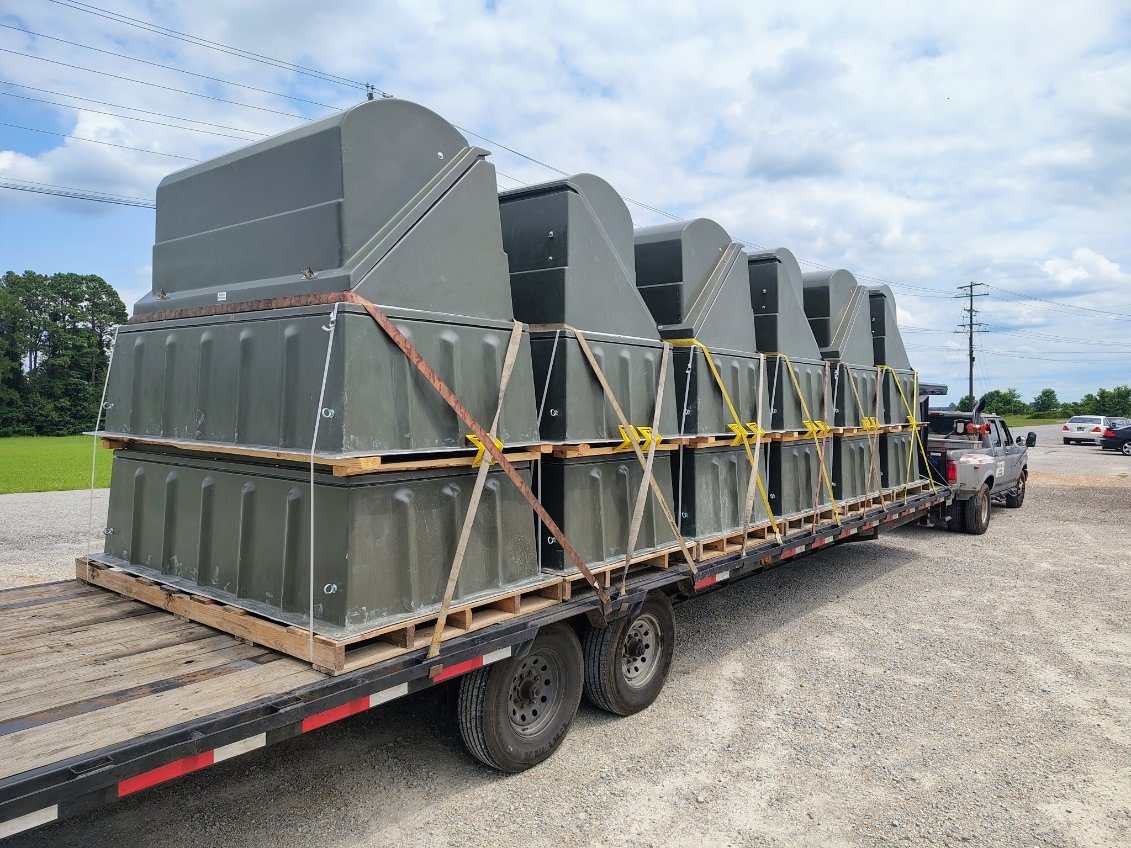
How is a compressor package rigged?
On the skid, at the manufacturer's lift points. A packaged compressor has a structural base frame and everything else bolted to it — the cooler, the separator, the motor, the enclosure panels and the controller. The frame carries the load; nothing else does.
In practice that means forks under the skid at the designated pockets, or slings from the lifting lugs with a spreader so the enclosure is not squeezed. What never takes the load: the cooler and its piping, the air-end or motor eyebolts unless the manual designates them for the whole package, the control cabinet, the enclosure panels and the interconnecting pipe. Enclosure doors and panels usually come off first anyway, both to protect them and to expose the real lift points.
Receiver tanks are handled separately, and vertical tanks deserve respect — they are tall, empty and top-heavy, which makes them easy to tip and easy to dent. They come down onto cradles or dunnage rather than being stood in the corner of a trailer, and the legs, base ring and nozzles are all easily bent. Dryers and filter banks are lighter but delicate: a desiccant dryer's vessels and valve manifold do not appreciate being slung.
What the site walk has to capture
- Skid weight from the data plate, plus tank, dryer and filter weights
- Manufacturer lift points and whether the enclosure panels come off
- Door widths and the route out, including any turn tighter than the skid is long
- Pipe connection sizes and how the existing run is supported
- At the new plant: slab, level, and whether the receiver has a pad
- Ventilation — inlet air, discharge path, ambient temperature, and duct runs
- Power feed, and the condensate drain and separator arrangement
- How the plant gets air while the room is down, if it cannot go without
Where should the compressor go at the new plant?
Somewhere it can breathe. Ventilation is the most-missed requirement in a compressor room and the one that quietly costs money for years afterward. A packaged compressor rejects almost all the energy it consumes as heat, and it needs cool, clean inlet air and an unobstructed discharge path for that heat. Put one in a closed corner with no exhaust and it will run hot, trip on high temperature in summer, and cook its oil in between. The manufacturer publishes minimum clearances and airflow figures — those are the layout, not a suggestion.
The other siting items: inlet air away from dust, paint fumes, exhaust and anything corrosive; enough clearance around the package for a service technician to open the panels and pull the cooler; the receiver sized and placed so the air has somewhere to settle before it reaches the dryer; and a floor drain or collection point for condensate that ends up at an oil-water separator rather than in the storm system.
How is it set and leveled?
A packaged rotary screw is undemanding: a flat, level slab that can carry it, set on the manufacturer's vibration isolation pads, level enough that the oil sight glass reads true and the sump drains where it should. Most packages do not need anchoring beyond what keeps them from walking, though a seismic site may say otherwise.
Centrifugal and reciprocating machines are a different job. Those go on a designed foundation, get grouted, and get their coupling alignment checked cold and then verified after they have run and come up to temperature — proper millwright work, the same discipline as any other machine leveling and alignment. Skipping the alignment on a big rotating machine does not show up as a failure on day one. It shows up as a bearing at six months.
How do you reconnect plant air without creating leaks?
By supporting the pipe and isolating the machine from it. Two rules cover most of it: the piping's weight and thermal movement must never be carried by the compressor's connections, and there should be a flexible connector at the machine so its vibration does not travel into the hard pipe and crack a joint.
After that it is ordinary good practice — correct pipe size for the flow so the plant does not lose pressure across the run, a takeoff arrangement and slope that sends condensate to drop legs rather than into tools, isolation valves so a single machine can be serviced without shutting the plant, and the right order through the system: compressor, aftercooler, receiver, dryer, filters, distribution. Then leak-test before the plant leans on it. A compressed air system that was tight in the old building can easily be leaky in the new one, and leaks are a permanent operating cost nobody bills for.
What has to be checked before the first start?
Motor rotation, first and always. A rotary screw air-end run backwards can be destroyed in seconds, and reversed phases after a move are common — the feed is new, the connections are new, and nothing about the wiring looks wrong. The rotation check is a bump start with the direction verified against the arrow on the machine before it is allowed to run up.
Then the ordinary list: oil filled to the correct level with the correct oil, the cooler clean and the ventilation path actually open, valves lined up and the system able to build pressure, drains working, safety devices in place, and the dryer given time to come down to temperature before it is expected to do anything. Sequencing between multiple compressors is set up last, once each machine has been proven on its own.
Bottom line
- Depressurize the whole system including the receiver, then lock it out. Stored air is the hazard here.
- Drain the oil and the condensate before the package tilts on a fork or a ramp.
- Lift on the skid frame only — not the cooler, the piping, the panel or the enclosure.
- Ventilation and inlet air quality decide how the compressor lives, not the rigging.
- Check motor rotation before the first run. A screw air-end run backwards does not survive it.
Moving a compressor room, or a whole utility package with its dryers and tanks? That is machinery moving with the same handling discipline as chiller and HVAC rigging, and transport between sites is arranged through our licensed broker and carrier partners. Send the equipment list and the room layout and we will build the plan — start here.