A Conestoga is a flatbed fitted with a rolling curtain on a bow frame that opens from either end for forklift or crane loading. Securement rules do not change once it closes — tie-downs anchor to the deck's rub rails and stake pockets, never to the bows, and freight must clear the bow arch without touching the fabric. The payoff is weather and abrasion protection a hand-tarped flatbed can't match.
A Conestoga looks like a dry van from a distance and loads like a flatbed up close. That mismatch is where most of the confusion comes from — dispatchers who quote it like an enclosed trailer, drivers who tie down to the wrong thing, and shippers who assume the curtain is doing more than it is. It isn't a securement device. It's weather protection built onto a flatbed deck, and the deck underneath still runs by flatbed rules.
What is a Conestoga trailer?
A Conestoga trailer is a flatbed, step deck, or double-drop fitted with a rolling tarp system — a fabric curtain stretched over a frame of arched bows that rides on rails bolted to both sides of the deck, so the whole cover slides open from either end. Close it and you get a weatherproof enclosure over the entire load; open it and the deck underneath is a standard flatbed with nothing in the way. "Conestoga" is technically a brand — Aero Industries built the first one in 1984 and named it for the covered wagon — but the term is used across the industry now for any trailer built on the same rolling-frame principle, the way "curtain-side" gets used generically too.
That's also where the two names split. A curtainsider, in the European and drayage sense, is a box-bodied trailer with a fixed roof and floor and vertical curtains down the sides that unzip for side loading only — it behaves like a soft-walled dry van. A Conestoga's entire roof-and-wall structure retracts as one unit, exposing the full flatbed deck for loading from the side, the rear, or straight overhead by crane. The underlying flatbed still sets what the trailer can carry — deck length, width, and legal height — and the curtain only decides how the load rides once it is on.
How does the rolling curtain system work?
The bows arch overhead on rollers that run inside track rails mounted the full length of the deck on both sides. Tarp fabric is stitched over and between the bows, so the whole assembly — bows, rails, and tarp — moves as one piece when it's pushed, cranked, or (on powered systems) motored to either end. An experienced two-person crew can open or close a Conestoga in five to fifteen minutes, against twenty-plus minutes and at least two people for a full hand-tarp job on an open flatbed.
The parts that matter to a fleet
- Track rails — mounted to both sides of the flatbed frame, they carry the rolling load of the whole curtain assembly. They also narrow the usable interior width by a couple of inches versus the bare deck — freight that's legal-width on the deck can still be too wide to clear the rails.
- Bows — the arched hoops that hold the tarp's shape and set the overhead clearance a load has to fit under. They are structural to the cover, not rated to restrain cargo.
- Curtain fabric — heavy-duty coated tarp that sheds water and road grit. It rides above and beside the load; it is never meant to touch it.
- Rear and front bulkheads / locking rail — where the curtain seals and locks once closed, keeping weather out along the bottom edge.
How do you load a Conestoga trailer?
Roll the curtain to one end — or split it front and back on a longer trailer — and the deck underneath loads exactly like an open flatbed: forklift from the side, crane from overhead, or driven or rolled in from the open end. Nothing about the curtain changes flatbed loading practice; it just removes the step where a crew hand-tarps after the fact.
- Open the curtain fully or split it to the section of deck being loaded, and confirm the bows are locked out of the way before anything comes across the rails.
- Check the load against the interior envelope before it goes on — width inside the track rails, and height under the bow arch at full curtain closure, not just legal flatbed limits.
- Place and center the load over the axles the same as any flatbed load, heaviest and densest freight low and centered.
- Block, brace, and tie down before the curtain closes — never after. A curtain closed over an unsecured load hides the problem instead of solving it.
- Roll the curtain closed last, and lock it down the full length so it can't billow and work loose at highway speed.
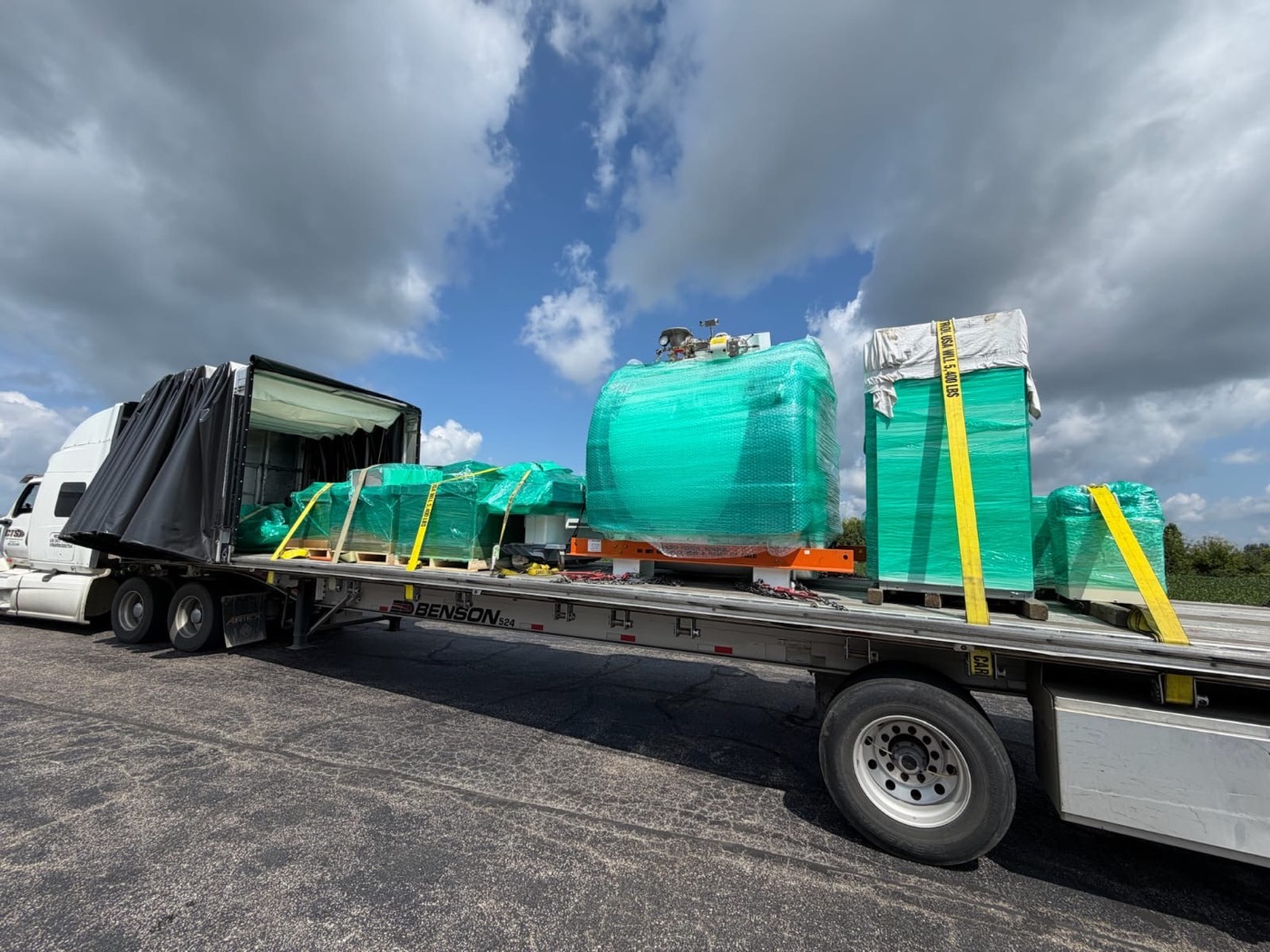
How do you secure a load inside a Conestoga?
The same way you'd secure it on an open flatbed, because the federal cargo securement rules don't change when a cover goes over the load. Total tie-down working load limit still has to be at least half the cargo weight, blocking and bracing still has to stop movement in every direction before a strap is tensioned, and tie-down points still have to be located where the regulations require them — generally inboard of the rub rail, on hardware rated for the job.
The part that trips up crews new to Conestogas: the bows and the track rail are not tie-down points. They carry the weight of the cover system, not the pull of a ratchet strap or chain binder. Anchor to the flatbed's own rub rails, stake pockets, and deck-mounted D-rings — the same hardware an open flatbed uses — and route straps and chains under or around the bow frame without cinching against it. A load also has to clear the bow arch without pressing on the fabric; freight leaning into the curtain wears through it over a long run and can tear it loose from the bows, which turns into a trailer-damage claim on top of whatever happens to the cargo underneath.
How is Conestoga securement different from open-deck securement?
On paper, it isn't — same regulations, same math, same blocking-and-bracing-first order of operations. For the actual mechanics of building that securement — dunnage, chocks, cradles, and how to control fore-aft, side-to-side, and vertical movement — see blocking, bracing and dunnage explained; none of it changes because a curtain is going over the top.
What's different is physical, not regulatory. An open flatbed gives unlimited overhead clearance and the full deck width to work with when running chains and bracing structure. A Conestoga caps load height at the bow arch and narrows usable width at the track rails, so a load plan has to account for the cover before the truck ever gets loaded — not after it turns out the curtain won't close. For choosing between deck types, see step deck vs drop deck trailers; for getting a machine ready to ship, see how to prepare a machine for shipping.
What does a Conestoga protect against that a tarped flatbed doesn't?
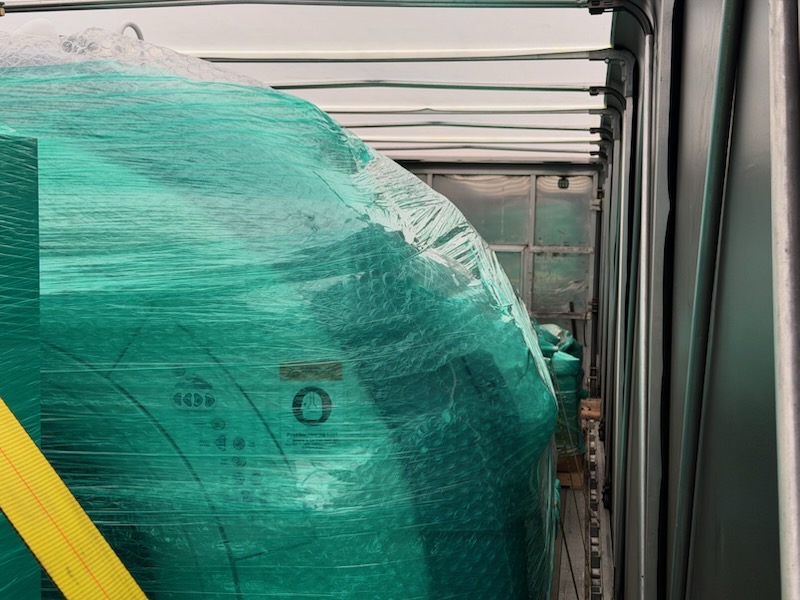
Hand-tarping drapes canvas directly onto the cargo, so every high point on the load takes the weight and friction of that tarp bouncing over hundreds of miles, and any water that finds its way underneath pools against wood dunnage and bare metal instead of running off. A Conestoga's curtain never touches the load — it rides on the bow frame above and beside it — so it sheds rain and keeps road spray and grit off painted or machined surfaces without rubbing on any of it. That difference shows up directly in claims: less moisture staining, fewer scuffed edges and cracked coatings at the destination dock, and freight that doesn't need to be re-cleaned or reworked before it can be accepted.
The trade is a different claim risk, not a lower one across the board. A torn curtain, a bent bow, or a track rail knocked loose by freight loaded too wide or too tall is a Conestoga-specific failure that an open flatbed never has, and it's usually caused by exactly the same mistake — loading past what the cover was built to clear. Pre-trip inspection on a Conestoga fleet needs to cover the bows, pins, and tarp the same way a flatbed crew checks straps and chains.
What freight wins on a Conestoga that a flatbed can't?
Freight that has to arrive looking like it never left the plant: machined castings, painted sheet metal, coiled or rolled stock, packaged building materials, and palletized goods that can't take moisture or road film. It also suits freight that doesn't need to announce itself to every vehicle on the interstate — a closed curtain doesn't identify the load the way an open, strapped flatbed does, which matters to shippers moving anything they'd rather not have obviously visible in transit.
Where a Conestoga loses to a plain flatbed: anything taller or wider than the bow arch and track rails can clear, and anything at the top end of what the trailer can legally carry. A Conestoga's frame and tarp hardware add weight the trailer has to carry itself, so payload typically runs a bit under a comparable flatbed's — worth confirming against the specific trailer's spec plate before it gets dispatched against a heavy load. Freight that needs that extra margin, or overhead clearance the bows can't give, goes back to an open deck.
What should a fleet check before running Conestogas?
Curtain operation needs to be trained, not assumed — a curtain that isn't locked down its full length can work loose and billow at speed, and a driver who doesn't know how to seat the bows correctly can bend one on the first trip. Interior width between the rails and height under the bow arch both need to be known numbers before a load gets booked against them, not discovered at the dock. And the pre-trip inspection needs a Conestoga-specific line item — bow pins, roller wheels on the track rail, and tarp condition — alongside the usual straps, chains, and deck check.
For a dispatch desk, the payoff is knowing what a Conestoga is actually worth to a shipper. A trailer that protects a load without a hand-tarp crew and a weather delay is worth quoting differently than a bare deck — but only if the freight and the equipment are matched correctly in the first place.
Bottom line
- A Conestoga is a flatbed with a rolling, bow-frame curtain — the deck underneath loads and secures exactly like an open flatbed.
- Tie-downs anchor to the deck's rub rails and stake pockets, never to the bows or track rail.
- The curtain protects against moisture and rub damage a hand-tarp can't match, but adds a new failure point if freight is loaded too wide, too tall, or against the fabric.
Running flatbed, step deck, reefer, or Conestoga equipment across four or more trucks? Our truck dispatch desk books freight matched to the trailer, not just the lane, through our licensed broker and carrier partners. And when Conestoga capacity needs to run the same route on the same schedule for weeks rather than one load at a time, that's what a dedicated lane is built for.