Blocking and bracing physically stop cargo from moving; tie-downs only hold it against the blocking. Riggers use hardwood dunnage, chocks, cleats, cradles, and shoring to lock a load fore-aft and side-to-side, then add straps or chains rated to at least half the cargo weight. The goal is a load that cannot shift on a hard brake, a sharp turn, or a rough road.
Walk past a loaded flatbed and you notice the straps. But straps are the last thing that goes on, and on their own they do not stop a heavy load from moving — they hold it against something. That something is blocking and bracing, and it is the part of securement that actually keeps cargo still. Here is how it works.
Blocking and bracing vs. tie-downs
The two do different jobs. Blocking and bracing physically fill the space around a load so it cannot slide or tip — wedges, chocks, and structure that stop motion. Tie-downs (straps and chains) then clamp the load down against that structure. Rely on straps alone and a heavy machine can still rock, walk, and load-shift on a hard stop. Block it first, and the straps only have to keep it seated.
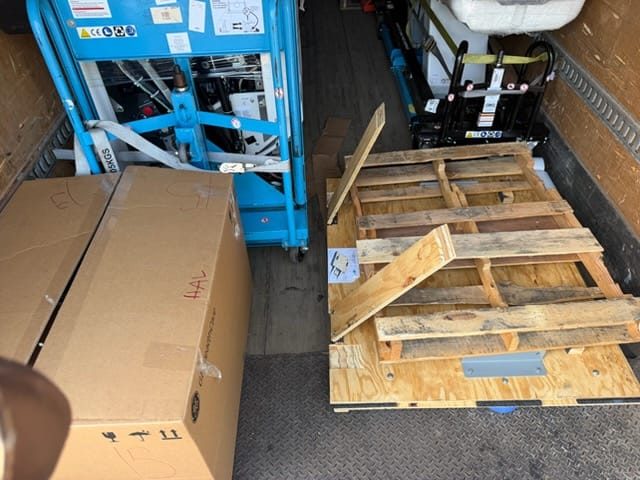
The tools of the trade
- Dunnage. Hardwood beams and blocks that carry weight, fill gaps, and create bearing points. The backbone of most bracing.
- Chocks and cleats. Wedges nailed to a wooden deck that stop wheels, skids, and rounded loads from rolling or sliding.
- Cradles and racks. Shaped supports for coils, pipe, tanks, and anything that will not sit flat on its own.
- Shoring and bracing bars. Structure that braces a load against the trailer walls or a bulkhead in a van or box truck.
- Edge protectors and friction mats. Save straps from sharp corners and add grip so the load resists sliding in the first place.
Fore-aft, side-to-side, and up
A proper job controls movement in every direction. Hard braking throws a load forward; acceleration and hills push it back; curves and crosswinds shove it sideways; rough road tries to bounce it up. Each of those gets its own blocking or tie-down so no single event can start the load moving. Federal rules put a number on the down-force — total tie-down working load limit of at least half the cargo weight — but the blocking is what makes that number mean something.
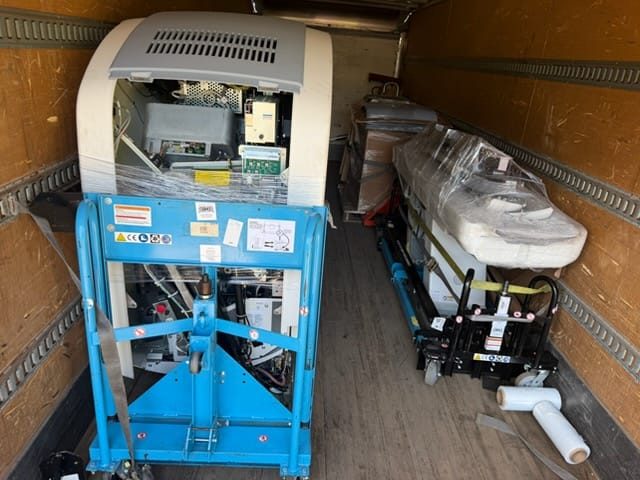
Why it matters more than the strap count
A load that shifts is how equipment gets damaged, how trailers get unbalanced, and how cargo ends up on the shoulder. Good blocking and bracing is invisible when it works and obvious when it does not. It is also the difference between a machine that arrives ready to install and one that arrives with a cracked casting. This is standard on every machine shipment and rigging job we run.
The short version
- Blocking and bracing stop movement; tie-downs hold the load against it.
- Dunnage, chocks, cradles, and shoring are the tools — matched to the load.
- Control every direction: forward, back, sideways, and up.
- Tie-down capacity of at least half the cargo weight is the floor, not the plan.
Want your load braced like it matters? Tell us what you are shipping and our crews will build the securement around it.