Transporting a CT scanner means de-installing the gantry and table to the manufacturer's procedure, protecting and rigging each component through the building on skates, hauling on an enclosed air-ride trailer with shock and tilt indicators, then reinstalling and coordinating OEM recalibration on site. It is a rigging job first and a trucking job second.
A CT scanner does not move like furniture. The gantry alone can run several thousand pounds, the components are precision-aligned, and the whole system is worth more than most of the vehicles on the road. Move it wrong and you are not paying for a repair — you are paying for a replacement plus the downtime of a dark imaging suite. Here is how it is done right.
It is a rigging job, not a delivery
The truck is the easy part. The hard part is getting a multi-thousand-pound gantry out of an imaging suite that was built around it — through doorways, around corners, down corridors never meant for something that size. That is industrial rigging: skates, stair-climbers, gantry lifts, and door-and-path measurements taken to the inch before anything moves.
1. De-install to the manufacturer's procedure
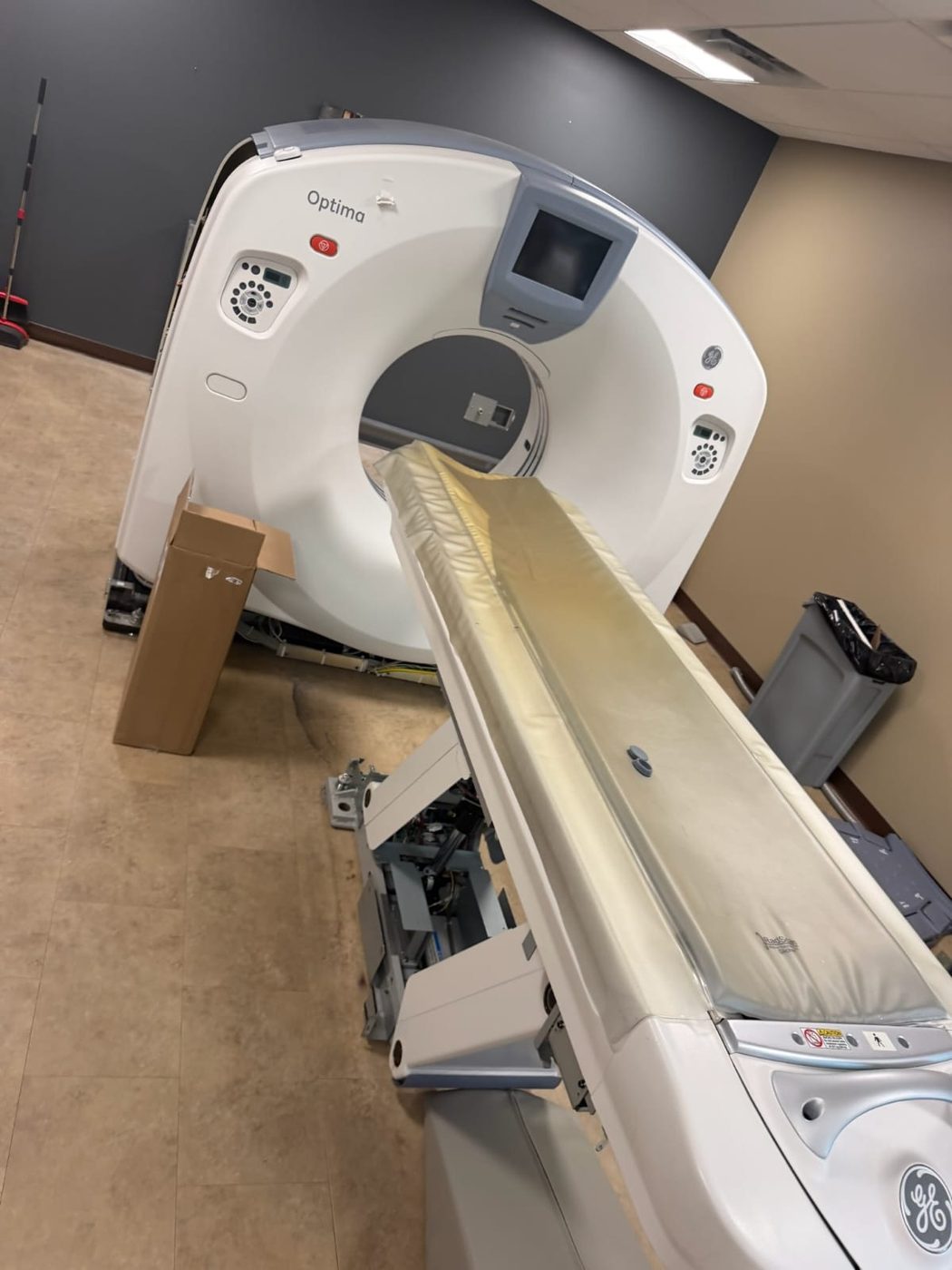
Imaging OEMs publish a de-installation procedure for a reason. The gantry and patient table come apart into defined transport components, covers come off or get protected, and moving locks go on to keep the rotating assembly from turning in transit. Skip a step here and alignment gets destroyed before the machine ever reaches the dock.
2. Rig it out of the building
Each component gets padded, wrapped, and moved on air-cushion skates or a stair-climber along the surveyed path. Floor protection goes down, door frames get protected, and the crew controls every pivot. This is where the clearances you measured on paper meet the real corner — and why the survey happens first.
3. Transport on air-ride, monitored
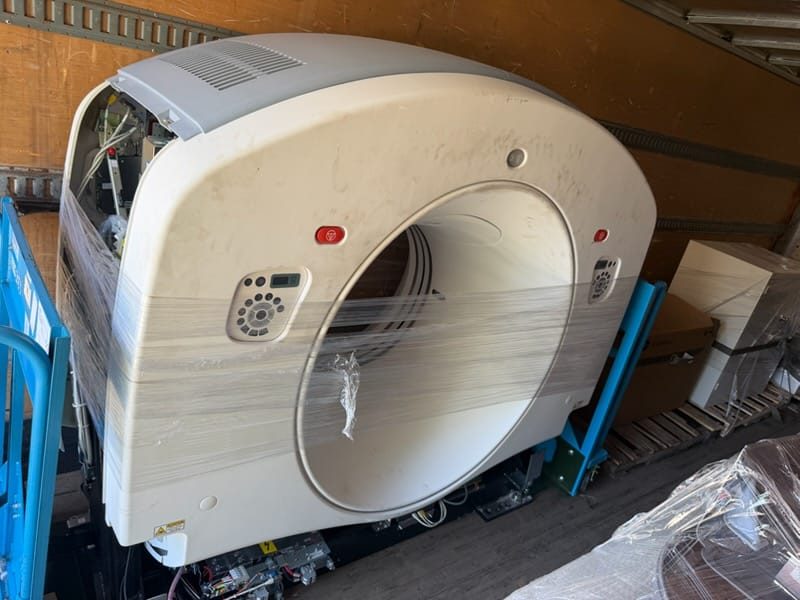
Imaging equipment rides on air-ride suspension only — the entire point is to keep road shock off precision components. The load is blocked, braced, and secured upright, usually with shock and tilt indicators on the crate so anyone can see if it was dropped or laid over. Sensitive electronics travel enclosed and shielded, not open to the weather.
4. Reinstall and recalibrate
At the destination the process reverses: rig in along a surveyed path, set on the pad, reassemble, and remove the moving locks. Then the OEM field engineer recalibrates and the scanner is re-qualified before it images a single patient. Our job is to deliver it undamaged and on schedule so recommissioning starts on time.
What actually matters
- Follow the OEM de-install procedure — moving locks and defined components, not shortcuts.
- Survey the path and rig each piece out on skates; measure clearances to the inch.
- Air-ride, enclosed, upright, with shock and tilt indicators — every mile.
- Coordinate reinstall with the OEM engineer so recalibration starts on time.
Moving a CT, an MRI, a C-arm, or a whole imaging department? Our rigging and machinery moving crews handle medical imaging start to finish. Send the model and the site details and we will build the plan.