Generator rigging means lifting and moving the unit on its base frame — never the enclosure. Pull the skid's rated lift points, run the fuel and belly tank down, disconnect the battery and control wiring, protect the radiator and enclosure panels, then crane-pick or skate it low between sites. At the destination, set it on the pad, anchor to the isolators, and hand off for alignment before commissioning.
A generator is an engine, an alternator, and a steel base frame that usually doubles as the fuel tank — and that base frame is the only part of the machine built to be lifted, chained, or set on a pad. The enclosure around it is acoustic insulation wrapped in thin sheet metal, not structure. Rig a genset like the skid is the whole story, and it moves clean; rig it off the enclosure or the radiator, and the failure shows up as a cracked isolator, a dented panel, or a control system that never quite reads right again.
How do you rig a generator for transport?
Generator rigging starts and ends on the base frame. Pull the skid's rated lift points from the spec plate or the builder's rigging print — most standby and prime-power units have cast or bolted lift lugs at the four corners of the frame, sized for a specific working load. A spreader bar shackled into those points keeps the slings vertical and clear of the enclosure walls, and keeps the pick centered on the engine end, where most of the weight actually sits. Some enclosures carry a single rated lifting bail on the roof; use it only if the data plate confirms the rating, and never as a substitute for the base-frame points on a heavier unit.
Indoors, a lighter standby unit comes up on toe jacks and rides out on machinery skates, kept low and centered with steel plate over any floor joint in the path. Past what a forklift or skate set can handle safely, the move goes to a crane pick from the documented lift points — the same discipline covered in industrial rigging generally, just applied to a machine whose weight sits low and off-center toward the engine block rather than distributed evenly across the frame.
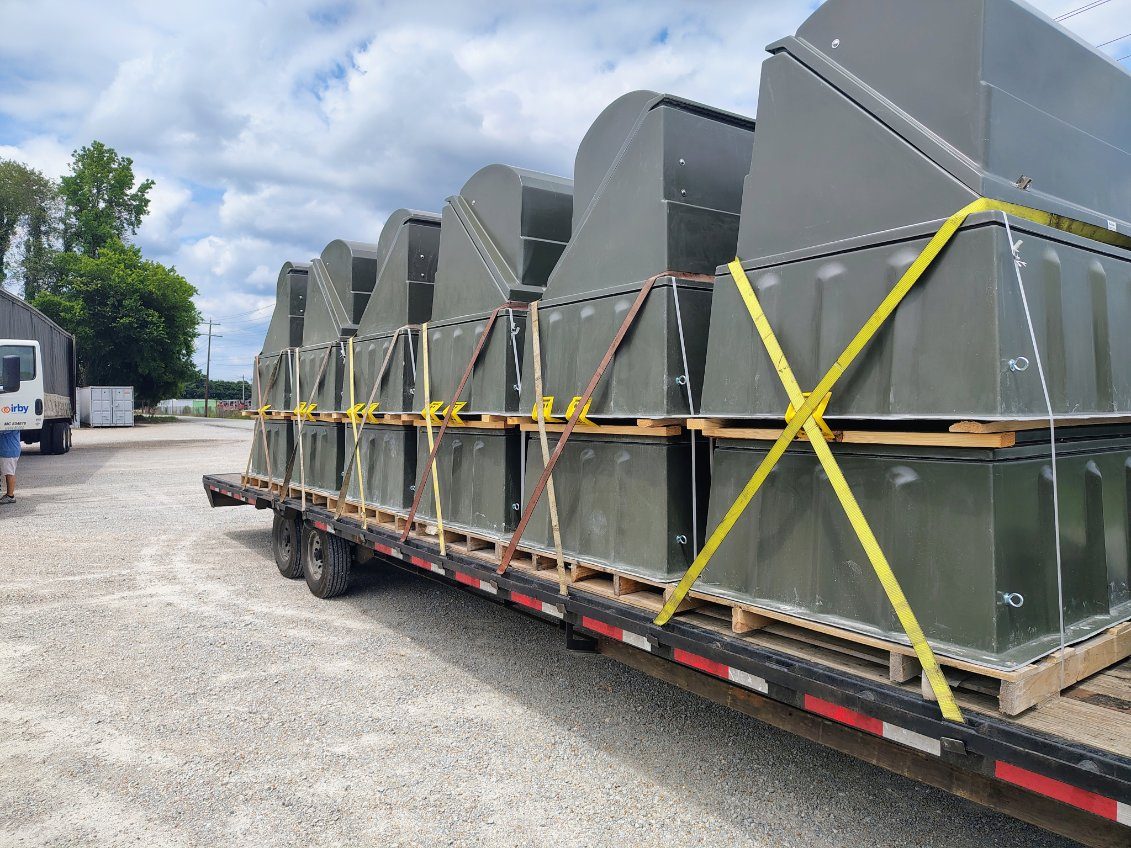
Do you have to drain the fuel before moving a generator?
Yes, and it's not optional on anything past a small portable unit. Diesel runs roughly 7 lbs per gallon, so a full base or belly tank can add thousands of pounds to the rigged weight — enough to change the lift plan, the trailer, and whether the load is centered where the spreader bar assumes it is. Fuel that isn't run down also sloshes in transit, which shifts the load's balance mid-move in a way a static rigging plan doesn't account for.
- Base or belly tank — run down or pumped to near empty before the unit is lifted, not just before the truck arrives.
- Battery — disconnected and terminals taped, so nothing energizes or arcs during handling.
- Control and remote-start wiring — isolated and secured; loose leads snag on rigging hardware and on the enclosure's own door hinges.
- Coolant and oil — normally stay in for a short move, but every vent gets capped and every seam checked for weeps before the pick.
A unit that's still carrying fuel when it's picked isn't just heavier than the rigging plan assumed — it's also a fluid-handling problem the moment the frame tilts a few degrees off level, which is exactly what happens at the top of a lift.
What the site walk has to capture
- Genset weight class — dry and wet — plus footprint and the base frame's documented lift points
- Fuel and fluid systems to run down or drain before the pick: base tank, belly tank, battery
- Enclosure type and condition — louvers, radiator core, and door hardware that need padding before anything rigs near them
- Pad or isolator condition at both ends — existing anchor pattern, isolator mounts, and whether the destination pad is cured and rated
- Path and floor loading from the current position to the loading dock, including door widths and floor joints
- Access for a crane or gantry if the unit is past what skates and a forklift can move safely
How do you move a generator that still has fuel in it?
The honest answer is: you don't, if there's any way around it. A genset with fuel still in the base tank should be treated as a partial drain job first — pump or run the tank down as far as operationally possible before it's touched by rigging hardware. If a receiver or site condition genuinely requires the unit to move with fuel aboard, that changes the rigging math directly: the added weight has to be built into the lift-point rating and the spreader-bar sizing, the center of gravity shifts toward wherever the fuel sits in the frame, and the unit has to stay upright through the entire pick and set — no tilting it to clear a doorway, no laying it over to change its profile. Tipping a fueled generator dumps fuel and oil where they don't belong and can starve the lubrication system on the next start, on top of the rigging risk.
How does enclosure type change the rigging plan?
An open-skid genset rigs the most straightforwardly — the frame and lift points are exposed, and the only real prep is protecting the control panel and alternator with a wrap before it's set outside. A sound-attenuated enclosure adds a full sheet-metal shell with louvered panels, a radiator screen, and lockable doors, all of which are fragile against sling contact and carry zero rigging load. Padding goes over the louvers and radiator core before anything rigs near the unit, and every door gets latched so it can't swing and take a hit in transit. Larger prime-power and data-center-class units often ship in a full ISO-style enclosure or container, which changes the pick geometry again — the lift points move to the container's own rated corner castings rather than the genset frame underneath, and that's a detail worth confirming with the enclosure builder before the crane shows up.
How is a generator set and anchored at the destination?
Rigging doesn't end when the unit clears the truck. At the new site, the genset gets set on its pad — concrete, structural steel, or a vibration-isolated foundation, depending on the install — and the base frame gets anchored to the isolator mounts specified by the builder. That's millwright territory: leveling the base, torquing the isolator bolts to spec, and confirming the frame sits flat with no rock between the mounts before any electrical or mechanical hookup happens. A unit set slightly out of level transmits vibration into the pad instead of the isolators absorbing it, which shows up later as a fatigue problem in the mounts, not on day one.
Alignment and commissioning pick up from there — confirming the engine-to-alternator coupling, checking the exhaust and cooling connections, and running the load-bank test that qualifies the unit before it's live. That handoff from rigging crew to commissioning team is where a generator relocation actually finishes, not at the loading dock. For a unit going into a purpose-built enclosure or vault rather than a pad in the open, the building-access questions mirror moving a transformer into a building — door widths, floor loading on the path in, and whether the unit clears on its skid or has to come apart first.
Bottom line
- The base frame is the rigging structure. Lift it, chain it, and anchor it there — never the enclosure or radiator.
- Run the fuel and belly tank down before the pick; a full tank adds weight and shifts as it sloshes.
- Disconnect the battery and isolate control wiring before anything rigs near the unit.
- Pad the louvers and radiator core; enclosure panels and door hinges carry no rigging load.
- Skate a lighter standby unit indoors; crane-pick heavier prime-power and containerized units from the base frame's rated points.
- The move between sites runs through our licensed broker and carrier partners.
- Setting and anchoring on the new pad, then alignment and commissioning, finishes the job — not delivery.
Moving a standby unit, a prime-power package, or a full generator plant relocation? It's generator rigging, industrial rigging, and millwright work end to end — send the spec plate and both site layouts.