Switchgear moves in shipping splits of one to three vertical sections, set upright on a level floor or pad and then joined section to section so the bus splices land square and draw-out breakers rack in freely. The gear is top-heavy, never laid down, and kept dry throughout. Substation equipment is set by crane onto foundations, then jacked and slid into final alignment.
Electrical gear is the odd one out in industrial rigging. A switchgear lineup is nowhere near the weight of the machines around it — and it is still one of the easier things on site to ruin. It is tall and narrow with a high center of gravity, so it goes over rather than sliding. Its insulation hates moisture, so a night in the rain on a lay-down yard costs more than the rigging did. And the whole lineup has to end up straight enough that a draw-out breaker racks into its cell without being forced.
Get those three things right and the setting work is straightforward. Get any one of them wrong and the electrical contractor finds out at energization, which is the worst possible time.
What counts as switchgear and substation equipment?
- Low-voltage switchgear and switchboards. Indoor lineups of vertical sections, often with draw-out breakers, feeding a plant's distribution.
- Medium-voltage metal-clad switchgear. Taller, deeper, heavier per section, with compartmentalized breakers and grounded barriers between them. Usually the alignment-critical one.
- Motor control centers. Lineups of bucket sections. Lighter per section, more of them, and the buckets often ship separately.
- Substation apparatus. Power transformers, dead-tank and SF6 breakers, reactors, instrument transformers, disconnect switches and steel — all outdoor, all set on foundations.
- E-houses and control buildings. Pre-assembled buildings with the gear already inside, set as a single pick. These are the ones where the pick plan matters more than anything happening indoors.
The indoor lineups and the outdoor apparatus are different jobs. What they share is that the gear arrives on a schedule the electrical contractor owns, and the rigging has to fit inside it.
How does a switchgear lineup arrive and get moved in?
In shipping splits — the manufacturer breaks a lineup into groups of one to three vertical sections that are bolted and braced together for transit, with the bus work between splits left to be joined in the field. Those splits are the units the crew handles. Nobody moves a twelve-section lineup as one piece.
Each split comes with lifting provisions the manufacturer specifies: removable lifting angles or plates at the top, or designated base channels. The pick uses a spreader so the slings pull vertically instead of squeezing the enclosure, because the sheet steel is structural only in the direction it was designed for. Where there is no headroom, the split goes on rollers, pipe or machinery skates and gets walked in on plate, jacked down onto its floor channels with toe jacks at the end — ordinary jacking and skidding, done gently.
The non-negotiables are short. Upright, always — switchgear is never laid on its back or its side to get through an opening. Never lift by the enclosure top, the doors, the instrument compartments or the bus. Never put forks under a section unless the manufacturer says where. And get the real shipping-split weights before anything is planned, because the medium-voltage sections are routinely double what people assume from the size.
Why does keeping switchgear dry matter so much?
Because the insulation system is what you are actually buying, and moisture degrades it. Condensation inside a cubicle tracks across insulating surfaces, corrodes bus joints and contact fingers, and shows up as a failed insulation-resistance test at commissioning — after the gear is set, anchored and terminated, when fixing it is expensive.
So gear stays sealed and wrapped until it is inside, stays out of the weather at every stage, and gets its space heaters energized from temporary power as soon as it is in place and there is any chance of condensation. If a lineup has to be stored before installation, it is stored indoors and heated, not tarped in a yard. The desiccant that shipped with it is checked rather than assumed. Every one of those steps is cheaper than one megger test that comes back low.
How precisely does switchgear have to be set?
Tightly enough that the bus splices land square and the breakers rack. In practice that means three things, and the manufacturer's instructions give the actual numbers for the lineup in front of you:
- The floor has to be flat and level before the first section lands. Switchgear is set on embedded floor channels or a level pad, and shimming a lineup flat afterward is far harder than getting the surface right first. A high spot in the middle of a lineup twists every section that crosses it.
- Each section is plumb and square to the one beside it. Sections are shimmed, pulled together with the manufacturer's hardware and checked as they go, not at the end. A lineup out of alignment shows up first as a breaker that will not rack smoothly into its cell.
- The bus splices are made by the electrical contractor to a torque spec. The rigging crew's job is to present the sections so those splices land without being pulled into place. Forcing a bus joint to close is how a high-resistance connection gets built into a lineup on day one.
Anchoring follows: floor channel welds or anchors as the drawings call for, and where the site has seismic requirements, the anchorage detail in the approved submittal rather than whatever the crew normally uses. That handoff — set and aligned by the riggers, terminated and tested by the electrical contractor — is the same split as any other millwright installation, and it works when both sides agree the tolerance in writing beforehand.
How is substation equipment set?
Outdoor apparatus is a crane job, then a precision job. Breakers, reactors and instrument transformers are picked from the trailer onto their foundations, and the pick is planned around a crane position that can reach every foundation without repositioning more than it has to.
Transformers are the exception worth calling out: a large unit is usually rolled or jacked and slid into final position on its rails or pads rather than flown into place, because the last few inches need control that a crane does not give. That work — jacks, slide plates, rollers, coming up to the anchor pattern — is covered in more depth in moving a transformer into a building, and setting one indoors is its own service. E-houses are a single pick on a rigging study, usually with the building's own designated lifting lugs and a spreader sized to keep the walls from racking.
What the site walk has to capture
- Shipping-split count and the real weight of each split, from the submittal
- Section height with lifting angles fitted, against door and ceiling clearance
- Route: door widths, turns, floor loading, ramps, and any raised floor or trench to plate
- Whether the floor channels or pad are in and level before delivery
- Crane position and reach for every outdoor foundation, and ground bearing under the outriggers
- Which gear on the route stays energized, and where the boundaries and barriers go
- Temporary power for space heaters, and where gear is stored if it lands early
How do you work safely beside energized gear?
By staying out of it, on someone else's authority, in writing. Every replacement job has the same shape: new gear goes in beside a lineup that is still feeding the plant, because the plant cannot go dark for the whole installation.
That means the facility's electrical authority owns the lockout and the switching, not the rigging crew. It means the arc-flash and approach boundaries are marked before the crew walks in, and barriers and ground protection are physically in place so nobody backs a skate or a jib into a live cubicle. It means only qualified electrical persons work inside those boundaries, and the riggers work in a de-energized, barricaded zone with an escort. Outage windows are booked in advance, and the sequence — de-energize, remove the old lineup, set and align the new one, terminate, test, energize — is agreed with the electrical contractor before anyone lifts anything, since their commissioning date is what the whole schedule hangs on.
Who does what on a switchgear installation?
The clean split, and the one worth writing into the scope so nothing falls between the trades:
- Riggers: offload, move in, set, level, align section to section, anchor to the drawings.
- Electrical contractor: bus splices to torque, cable pulls and terminations, control wiring, grounding, insulation-resistance and functional testing, energization.
- Manufacturer's field service: breaker checks, protective relay settings and the start-up sign-off on medium-voltage gear.
- Facility: the outage window, the switching, temporary power, and access.
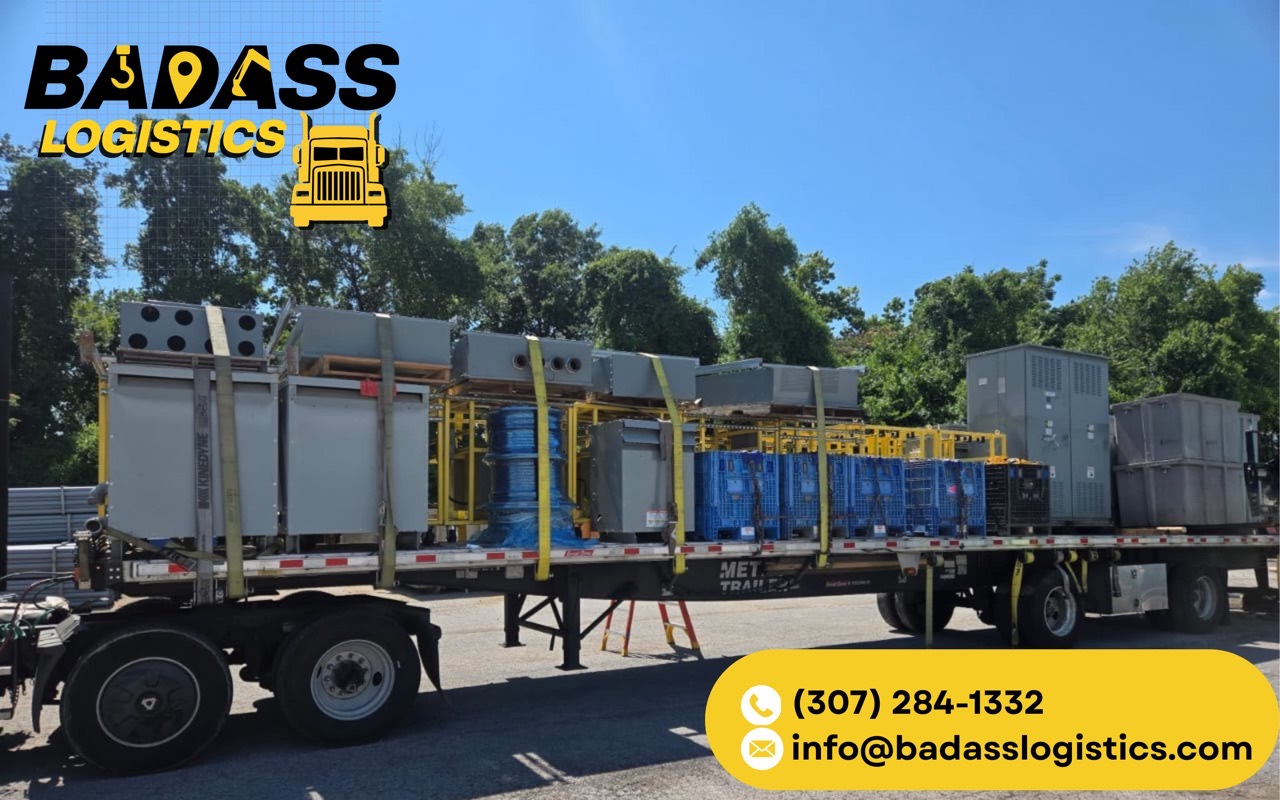
Equipment moving between sites is arranged through our licensed broker and carrier partners, enclosed where the gear warrants it, with delivery timed to the installation window rather than to whenever it is ready — because a lineup that lands three weeks early becomes a storage problem, and storage is where switchgear gets wet.
Bottom line
- Switchgear moves in shipping splits, upright, on the manufacturer's lifting provisions and a spreader.
- It is light for its size and top-heavy — it tips before it slides.
- Keep it dry and heated. A failed insulation test after termination is the expensive outcome.
- Level the floor first, then align section by section so bus splices land without being forced.
- The facility's electrical authority owns lockout and switching. Riggers work behind barriers in a dead zone.
Replacing a lineup, setting an e-house, or moving a substation's worth of apparatus? That is transformer and electrical equipment rigging with millwright setting behind it. Send the submittal with the shipping splits and the route into the room and we will build the plan — start here.