To move a surface grinder, lock the table travel, wrap the ways, remove or block the wheel, and rig from the base only. A grinder is more sensitive to racking than a mill because its accuracy lives in the way surfaces, not a separately trued spindle, so a twisted base degrades finish directly. At the new site it gets re-leveled to tenths, then proved with a test grind.
Riggers who move mills and lathes for a living sometimes treat a surface grinder as just another box on skates, and that is the mistake that shows up three weeks later as a wavy finish nobody can explain. A grinder does not tolerate what a mill tolerates. Its job is removing material in millionths of an inch off a surface that is already flat, and every part that makes that possible — the ways, the wheelhead, the base — is more fragile to a bad move than the equivalent parts on almost anything else in the shop.
None of that means a surface grinder needs anything exotic to move. It needs the same rigging fundamentals as any precision machine tool, applied without the shortcuts a coarser machine might survive.
Why is a surface grinder more sensitive to racking than a mill?
Because a grinder's accuracy is built into the way surfaces themselves, while a mill's accuracy is built into a spindle that gets trued and adjusted independently of the base. Rack a mill's frame slightly and the spindle bearings can often absorb it, or the machine gets re-trammed and keeps cutting to tolerance. Rack a grinder's frame the same amount and there is nothing downstream to absorb it — the table rides directly on the ways that just moved, and the wheelhead rides on its own ways that moved with it.
Racking is what happens when a rigid frame twists along its diagonal, usually from an uneven lift, a fork picking one corner instead of the whole base, or a machine set down on three points instead of four. On a welded steel frame carrying a mill spindle, that twist is often small enough to live with. On a grinder, the same twist bends the way surfaces by a few tenths — the entire tolerance band the machine is built to hold. The result is a grinder that still moves, still sparks out, and produces a part that looks fine until it goes on a comparator and the finish is out of flat.
This is why a grinder rigging plan puts more weight on how the machine is picked and set down than on how fast it gets there. A crane pick with slings at the four points the OEM designates, lifting square and level in one motion, does far less damage than a forklift pick that starts the base tilting even briefly.
How do you protect the ways during a move?
By locking them, covering them, and keeping every rigging point off them entirely. The ways — the precision-ground rails the table and wheelhead ride on — are the most expensive surface on the machine to damage and the easiest to damage by accident, because they sit exposed right where a hand, a strap, or a stray tool tends to land.
- Lock the table and wheelhead travel. Most grinders have a table lock and a down-feed lock built in; engage both so nothing rolls or drops during transport. Where the machine has no built-in lock, the crew fabricates a travel restraint rather than relying on friction to hold a table in place on a highway ramp.
- Cover the ways before anything else touches the machine. A rust-preventive coating goes on first, then a wrap — waxed paper or a heavy poly sheet, taped so it cannot shift — over every exposed way surface, including the sections under the table and wheelhead that only show once those components are retracted to one end of travel.
- Keep grit off, always. Grinding dust is the way surface's real enemy, sometimes worse than a light impact. A way that picks up abrasive dust under a loose wrap, or sits uncovered in a dusty rigging path, gets a fine scratch pattern that shows up as a streak in every part ground afterward.
- Never rig from the ways, the table, or the wheelhead. They are precision-ground and unhardened against a chain or strap. Every lift point is on the base or column, at the locations the OEM designates — a rule that applies to any machine tool, but one where the penalty for ignoring it on a grinder is immediate and expensive.
What does spindle protection actually involve?
Draining the coolant that feeds it, locking or removing the wheel, and keeping the whole spindle assembly from taking any shock load in transit. The spindle on a surface grinder runs at high speed and holds a bearing tolerance that a mill spindle does not need to match, which makes it the second most sensitive assembly on the machine after the ways themselves.
The grinding wheel comes off before the move on most machines — it is a brittle abrasive disc, it unbalances easily, and a wheel left mounted concentrates shock loads onto the spindle exactly where the crew least wants them. Where the wheel travels with the machine because removal is impractical, it gets blocked so it cannot rotate or contact anything. Coolant lines and the coolant tank get drained and capped; a coolant reservoir sloshing in transit is both a spill risk and unnecessary moving mass on a machine that is already sensitive to vibration. Spindle bearings on some grinders also call for a grease change or a specific parked position before a move — check the OEM manual rather than assume the standard shutdown procedure covers it.
Are granite-base grinders moved differently than cast-iron ones?
Yes, and the difference matters from the first lift. Granite bases — common on precision and CNC surface grinders built in the last few decades for their vibration damping and dimensional stability — are strong in compression and weak in tension and impact. A cast-iron base can absorb a bump or a slightly uneven set-down that a granite base cannot; granite chips and cracks instead of denting, and a crack in a granite base is rarely a repair, it is a replacement.
That changes the plan three ways. Granite gets picked with more deliberate care about even loading, since it does not flex to redistribute an uneven lift the way a steel weldment sometimes will. Granite is also heavier per unit of size, so true weight gets confirmed rather than assumed from a similar-footprint cast-iron machine. And granite is more temperature-sensitive: a machine moved out of a climate-controlled room needs time to re-stabilize before leveling, since granite and its bonded alignment can shift with temperature in ways cast iron will not.
Cast-iron bases, still common on older and manual machines, are more forgiving of impact but no more forgiving of racking — the base resists denting better, but the way surfaces on it are exactly as sensitive to a twisted lift. The base material changes what breaks. It does not change how carefully the ways get handled.
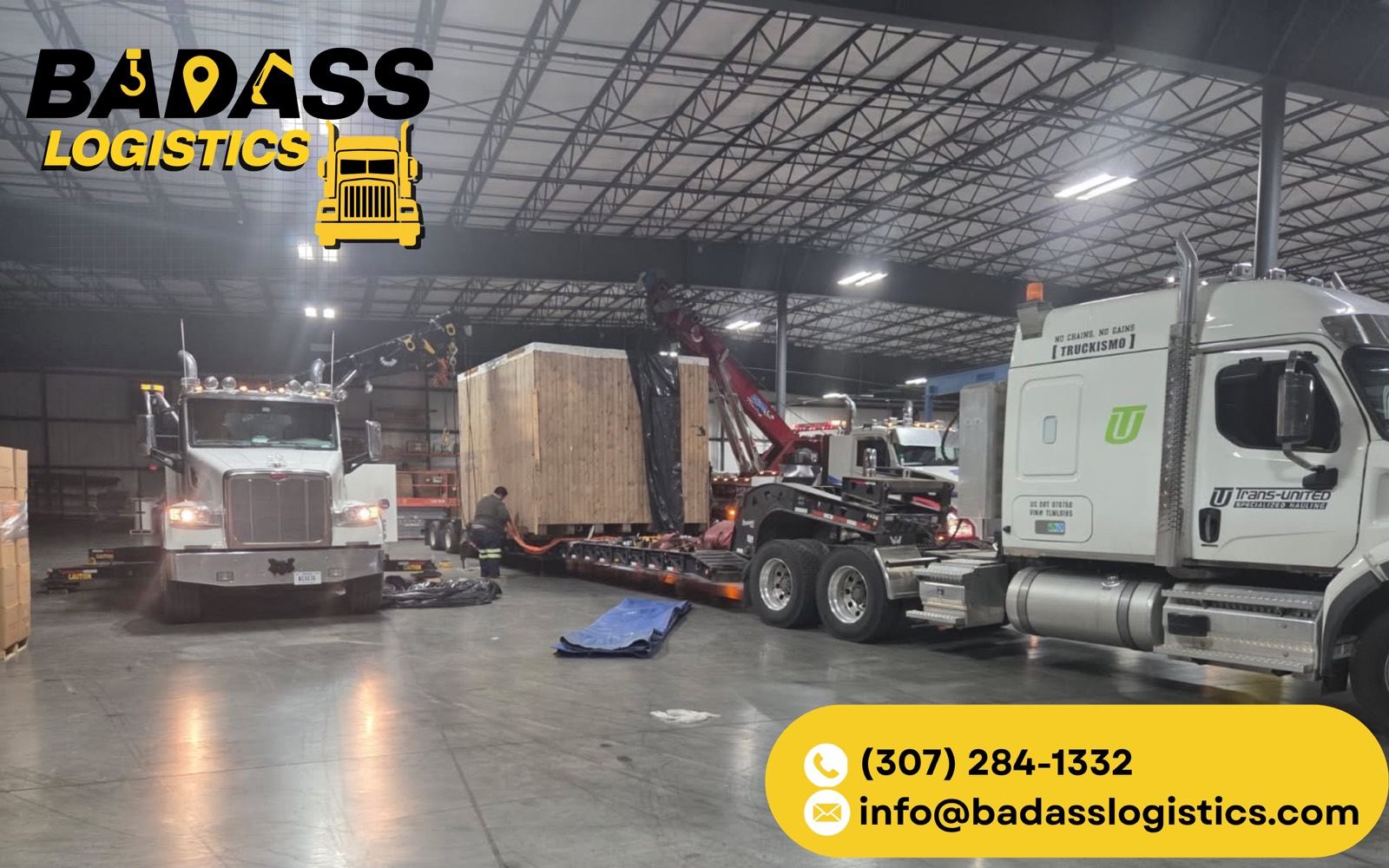
How is a surface grinder rigged out of a shop?
From the base, at the OEM-designated points, using a crane pick or a forklift under the frame — never a pick that touches the table, wheelhead, or column casting. On smaller manual grinders under a few thousand pounds, a forklift with forks set to the base's full width and the load centered is routine. On larger and CNC grinders, a crane pick with a spreader bar keeps the slings vertical instead of angling inward and squeezing the frame, which matters more on a grinder than on a coarser machine because that squeeze is exactly the kind of load that can rack the base.
Where the machine is walked rather than lifted — through a shop on machinery skates and steel plate, the same jacking and skidding approach used for any long, low machine — the jacking points matter as much as the lift points. Jack under the base at the reinforced locations only, and jack all corners in small, even increments rather than raising one end high before starting the other, which is the skidding equivalent of the racking risk at pick-up.
What the pre-move check has to confirm
- Base material — granite or cast iron — and the true weight and center of gravity from the OEM manual
- Table and down-feed travel locked, or a travel restraint fabricated where no lock exists
- Ways wrapped and rust-preventive applied before the machine leaves its original footing
- Grinding wheel removed or blocked, spindle coolant drained and lines capped
- OEM-designated lift and jack points on the base, confirmed before any strap or fork touches the machine
- Floor and route conditions checked so the machine is never set down on an uneven or debris-covered surface
- At the destination: a slab that can carry the machine and enough clearance to work a precision level around all four sides
Why does a surface grinder need re-leveling to tenths?
Because its accuracy is defined in tenths — ten-thousandths of an inch — and a machine that is level to a coarser tolerance will grind a part that is out of flat by exactly the amount it is out of level. This is the step that most separates a grinder move from moving a mill or a lathe, where a good bubble level and a general check across the bed is often enough to get back into production. A grinder gets checked with a precision level — an electronic or master precision level reading in tenths per foot — not the carpenter's level that would pass for a lathe.
The sequence: set the machine on its leveling pads on a slab confirmed to carry it, let it stabilize — longer on a granite base that traveled through a temperature change — then check level across the table's full travel in both directions, adjusting pad by pad. The target is not a single center reading; it is a flat, twist-free condition across the entire way length, because a grinder level in the middle and out at the ends still produces a part that tapers.
Once level is confirmed, the machine runs through table and wheelhead travel dry, checked for binding, then gets proved with a test grind against a known-flat reference. A level reading says the base is correct; a test part on a comparator says the machine is actually cutting to tolerance again. This work is millwright territory, picking up where the rigging crew's part ends.
What goes wrong most often on a grinder move?
Four things, in order of how often they show up. An uneven pick that racks the base without anyone noticing, because the machine still looks fine on the truck — it only shows up as a finish problem weeks later. Grit or an impact getting past an under-protected way. A wheel left mounted and unblocked, taking a shock load that chips it or loads the spindle unevenly. And a re-level done with a standard level instead of a precision instrument, which reads "good enough" right up until the first part comes off out of flat. Every one is cheaper to prevent up front than to diagnose after the machine is back in the cell making bad parts.
Bottom line
- A grinder's accuracy lives in the way surfaces themselves, so it is far more sensitive to racking than a mill or lathe.
- Lock the table and wheelhead travel, wrap the ways before the move starts, and never rig from them.
- Remove or block the wheel, drain the coolant, and treat the spindle as fragile cargo.
- Granite bases need even loading and time to thermally stabilize; cast-iron bases resist impact better but rack the same.
- Rig and jack from the base at OEM points only, lifting or raising all corners together rather than one end at a time.
- Re-level to tenths with a precision level across the full table travel, then prove it with a test grind before production resumes.
Moving a surface grinder, a grinding cell, or a whole precision floor? That falls under core machinery moving and millwright work, and the same fundamentals apply whether the base is granite or cast iron. Send the machine list with base type and weight and we will build the rigging and leveling plan around it — start here.