Chiller rigging is an access and reconnection problem, not a transport one. An EPA Section 608-certified technician must recover the refrigerant before a rigging crew touches the unit. A rooftop pick needs a checked roof structure and a crane sized to the real radius. Once set, the unit needs its vibration isolators relevelled, its water-side piping flushed and reconnected, and a mechanical contractor's start-up commissioning before it runs.
The transport side of a chiller move is the part everyone already understands: flatbed or step deck, upright, chained to the frame. The side that actually breaks a schedule or damages a unit is everything around the truck — getting the refrigerant out legally, getting the machine off a roof or through a mechanical room, resetting it so it doesn't shake itself loose, and getting it reconnected and proved out before anyone calls the job done. That's the rigging half, and it's where a chiller move is actually won or lost.
Who is legally allowed to recover refrigerant from a chiller?
Only a technician holding the right refrigerant handling certification — in the US, EPA Section 608 for comfort-cooling equipment — can recover the charge from a chiller before it's disturbed. This isn't a preference or a liability workaround; it's federal law, and venting refrigerant to atmosphere instead of recovering it is a violation with real penalties attached. A rigging crew sets lift points and plans the pick, but it does not touch the refrigerant circuit — that step belongs to a licensed mechanical contractor or service technician, full stop, and it has to happen before anyone breaks a flange or puts a sling on the unit.
What rigging controls is the sequencing: when the recovery tech shows up relative to the crane or the skate crew. Recovery on a large centrifugal machine can take hours, especially on an older low-pressure chiller holding a large charge, and it has to finish — fully, with the circuit confirmed empty and capped — before the unit is picked. Scheduling the recovery tech a half-day ahead of the lift, rather than hoping they finish on time, is the difference between a crew standing around and a job that runs on the hour it was booked for.
The recovered refrigerant itself has to be weighed, logged, and either reclaimed for reuse or sent for proper disposal — again, the mechanical contractor's responsibility, not the rigger's. What the rigging crew does need from that paperwork is the refrigerant type and charge weight, because it affects the unit's shipping weight and — on some low-pressure centrifugal machines — whether the vessel needs to be purged with dry nitrogen and held under a slight positive pressure during the move to keep moisture out of the evaporator and condenser shells.
What does a rooftop chiller pick actually require from the crane?
It requires a structural check at both the pick point and the set point, a crane sized to the load at the real working radius, and a clear path for the boom that doesn't exist on most roofs until someone looks for it. The roof deck under a chiller's curb was engineered for that specific unit's footprint and point loads — not for a crane mat, not for a second unit staged nearby, and not always for a different model's feet if the replacement doesn't match the original's footprint. A structural engineer or the roof's original design documents confirm what the deck can carry at the pick point and again at wherever the old unit gets set down temporarily, if it's coming off before the new one goes on.
The crane itself gets sized off the load chart at the actual radius to the roof, not a radius that looks close on a site plan — parapets, adjacent rooftop equipment, overhead lines, and setback from the building edge all eat into where the crane can actually set up and how far it has to reach. A centrifugal chiller's compressor housing and motor sit high and off-center on the unit, which shifts the rigging points and the sling angle away from a simple four-point pick at the corners; the lift plan has to work from the manufacturer's rigging diagram, not an assumption that a box lifts square. Screen walls, parapet caps, and any roof penetration near the set location usually need temporary removal or protection before the pick, and that teardown has to be scheduled ahead of crane day, not discovered once the crane is already on site and billing by the hour.
Why does vibration isolation need attention after the unit is reset?
Because a chiller that rode in on skates or came down off a crane does not land back on its isolators the way it left — and an isolator that's compressed unevenly or pinned against its housing transmits vibration straight into the building structure instead of absorbing it. Centrifugal chillers run spring isolators or neoprene-in-shear pads under the base rails specifically to decouple the compressor's rotating mass from the slab or roof deck; rooftop units in seismic zones add snubbers that limit how far the unit can shift sideways in an earthquake without those same snubbers choking off normal operating vibration the rest of the time.
The isolators have to be releveled after the unit is set, not assumed to be fine because they were fine before the move. That means checking that every spring or pad is carrying its designed share of the load — a unit set slightly out of level puts more weight on one side's isolators and less on the other, which both defeats the isolation and accelerates wear on the overloaded springs. Seismic snubbers get re-gapped to the manufacturer's clearance, typically a small fraction of an inch, after the unit is level and before it's bolted down for good. Skip this step and the first symptom usually isn't a safety issue — it's a noise complaint from the floor below a mechanical room, or a building engineer wondering why the new unit hums louder than the one it replaced.
What has to happen in sequence before a chiller runs again
- Refrigerant recovered and logged by an EPA 608-certified technician — before any rigging touches the unit
- Roof or mechanical room structure checked at both the pick point and the set point
- Crane sized to the manufacturer's rigging diagram and the actual working radius, not a rule of thumb
- Unit set level and vibration isolators — springs, neoprene pads, seismic snubbers — rechecked and regapped
- Chilled-water and condenser-water piping flushed, strainers cleaned, and flanges or welds inspected before closing the loop
- Start-up commissioning run and logged by the mechanical contractor before the unit is handed to operations
What has to happen on the water side before a chiller is reconnected?
The chilled-water and condenser-water loops have to be flushed and the strainers cleaned before the chiller is tied back in, because a loop that sat open or disturbed during the move picks up weld slag, scale, and construction debris that will lodge in the evaporator or condenser tubes the moment the pumps come on. On a centrifugal machine, that debris is exactly what fouls tube bundles and trips flow switches on the first start attempt — a problem that shows up as a nuisance trip, not as an obvious leak, which makes it easy to misdiagnose if nobody flushed the loop first.
Piping connections at a chiller are almost always flanged rather than welded specifically so the unit can be disconnected and reconnected without cutting pipe, and the flange gaskets get replaced on reconnection rather than reused — a compressed gasket that's been sitting disturbed for a move is a leak waiting for line pressure. Isolation valves on both the chilled-water and condenser-water sides get confirmed to actually isolate (not just close most of the way) before the loop is opened, and the pumps' variable-frequency drives get checked against the reconnected piping's actual flow resistance, since a chiller moved to a new location sometimes sits at a different elevation or pipe run length than the one it replaced. None of this is rigging work in the strict sense — it's the mechanical contractor's side of the reconnection — but the rigging crew's set position and orientation has to leave the flanges accessible and aligned, or the plumbing crew is fighting the rigging to get a wrench on the bolts.
What does start-up commissioning check before a chiller goes back in service?
Commissioning confirms the machine runs correctly before it's handed to building operations, and on a centrifugal chiller that's a longer list than flipping a breaker. The mechanical contractor pulls an oil sample and checks the compressor's oil charge and sump heater before the first start, since a centrifugal compressor's bearings and seals run on an oil system that has to be right before the shaft turns — running dry or low for even a short start cycle can score a bearing that then has to be replaced under warranty dispute instead of just refilled. On some larger units, especially ones that sat disconnected for a while during the move, an eddy-current tube test gets run on the bundle before start-up to confirm no tubes were damaged in transit — catching a hairline crack on the test bench costs a tube plug; catching it after a week of operation costs a flooded evaporator.
From there, commissioning is a logged sequence: refrigerant charge verified against the nameplate, water flows confirmed on both loops at design rates, motor amp draw checked against the nameplate at full load, and the control system's setpoints and safeties — low-pressure cutout, high-pressure cutout, flow switches, freeze protection — tested rather than assumed to still be set correctly after the move. That log is what gets handed to the building engineer as proof the unit is running within spec, and it's also the baseline every future service call gets compared against. A chiller that skips this step and just gets switched on can run for weeks looking fine before a soft fault that commissioning would have caught turns into a shutdown during the next heat wave.
What's different about rigging a centrifugal chiller specifically?
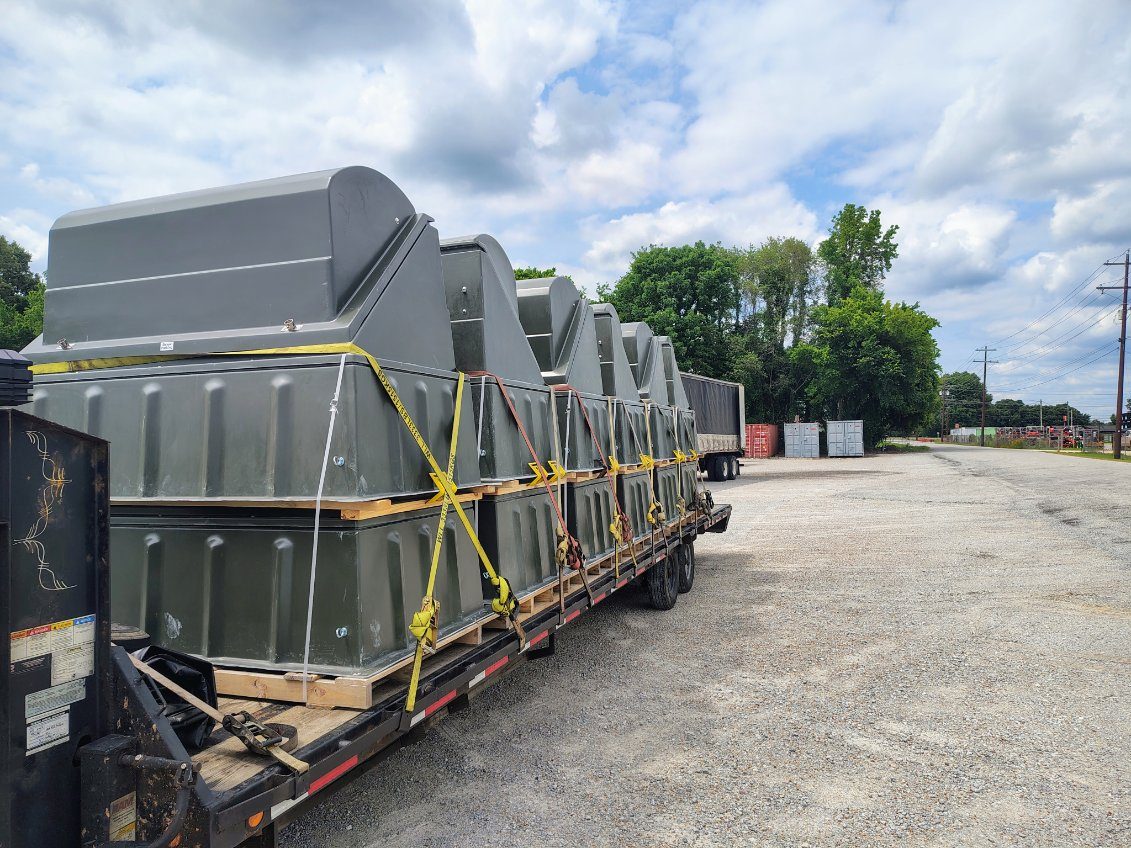
The compressor and motor assembly, mostly. A centrifugal chiller carries its heaviest, most off-center mass in the compressor housing rather than spread evenly across the shell the way a reciprocating or screw machine's weight sits, which shifts the center of gravity away from the unit's visual middle and changes where the rigging points and sling angles need to be. The tube bundle protection and internal bracing that applies to any shell-and-tube chiller still applies here — a shipping bar or brace holds the bundle still during the pick — but the compressor end also needs its own support during rigging, since that's the end carrying the oil system, the motor, and on larger units the variable-speed drive electronics, none of which tolerate being racked or shock-loaded the way a bare shell would.
This is also where the access problem and the refrigerant and reconnection problem meet: a centrifugal unit large enough to need a crane pick also holds a large refrigerant charge and runs a larger water-side loop, so none of these pieces — recovery, access, isolation, reconnection, commissioning — get planned in isolation. The site walk captures all of it before move day, the same way it does on any machinery move survey, because the roof report, the crane's load chart, the isolator spec, and the contractor's start-up checklist get written against the same unit at the same time.
Bottom line
- Refrigerant recovery is an EPA 608-certified technician's job, not rigging's — it has to finish before the unit is disturbed.
- A rooftop pick needs the roof structure checked at pick and set points, and a crane sized to the manufacturer's rigging diagram at the real radius.
- Vibration isolators get releveled and seismic snubbers regapped after the unit is set — not assumed fine from before the move.
- Water-side piping gets flushed, gaskets replaced, and valves confirmed to isolate before the loop closes back up.
- Start-up commissioning — oil charge, tube test, flows, amp draw, safeties — is logged before the unit goes to operations.
Planning a centrifugal or rooftop chiller move? Send the unit specs and the roof or room access and we'll work the rigging plan around the crane window and the mechanical contractor's recovery and start-up schedule, with freight between sites handled through our licensed broker and carrier partners.