The cost of moving a CNC machine is driven by its weight and dimensions, the rigging complexity at both ends (clearances, floor capacity, crane vs. skate), the distance and transport type (air-ride vs. flatbed), and prep like disconnection, crating, and re-leveling. A small VMC across town and a 40,000-lb machining center across the country are different jobs — send the model and both site layouts for a real quote.
Ask "what does it cost to move a CNC machine" and the honest answer is the same as for any rigging job: it depends on the machine and the two buildings it moves between. A benchtop mill and a 40,000-pound horizontal machining center are not the same job and should not carry the same price. What you can do is understand the levers — because once you know what drives the number, you can hand us the details that get you an accurate quote on the first call. We do not post flat rates, because a flat rate on a job this variable is just a wrong number waiting to happen.
What actually drives the price
- Weight and size. Heavier, larger machines need bigger rigging gear, more crew, and sometimes a crane instead of skates. Weight also decides the trailer the carrier partner sends and how the machine is loaded out.
- Rigging at both ends. This is the big one. Tight doorways, stairs, mezzanines, low ceilings, soft or weight-limited floors, and a long push from the machine pad to the truck all add labor and equipment. An easy dock-to-dock move and a machine buried three corners deep in an old building are worlds apart.
- Distance and transport type. Loaded miles matter, and so does how it rides — a precision machine on an air-ride enclosed trailer is a different cost than an open flatbed.
- Disconnection and prep. Draining coolant and hydraulics, retracting axes, protecting the control, and setting shipping brackets per the manual. Some shops do this themselves; some want it handled.
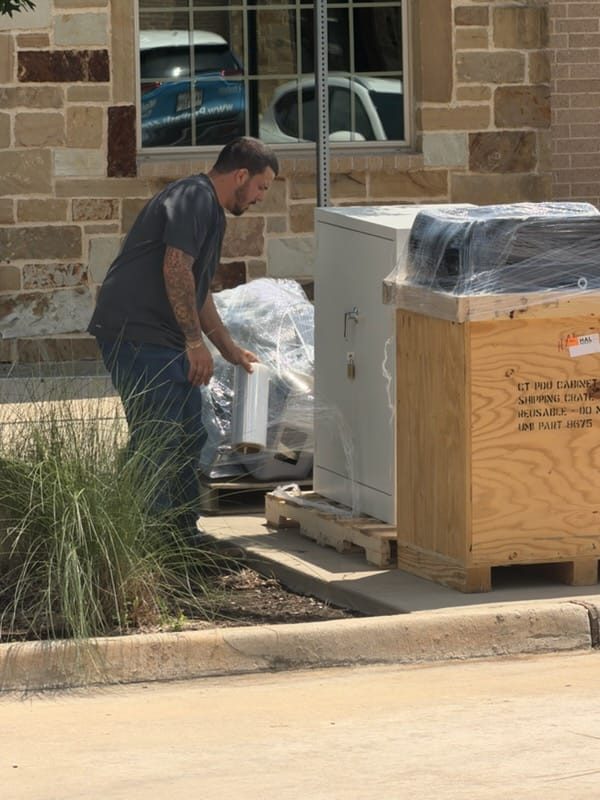
- Crating and protection. Large or delicate machines may need custom crating, shrink-wrap, and shock protection.
- Reinstall and leveling. Setting the machine on its new pad and leveling it to the builder's spec — because geometry and accuracy start from a level casting — is part of most moves.
How to get an accurate quote
Give us these and we can turn a real number around fast:
- Machine make, model, weight, and dimensions (the spec sheet is perfect).
- Both site layouts — doorway widths, path to the truck, stairs or elevators, floor type, and dock access.
- Whether you need disconnection, crating, and re-leveling or just the transport.
- Pickup and delivery locations and your target dates.
- A few photos of the machine and the path out — they answer a dozen questions at once.
That is the same information our crews use to size the rigging gear, spec the trailer, and price the labor. The more precise you are, the tighter the quote — and the fewer surprises on move day.
Can you make it cheaper?
Sometimes. Doing your own disconnection and reconnection saves labor if your team is set up for it. Flexible dates let us schedule efficiently. And a clear path out — cleared aisles, a removed door, a known floor rating — cuts the rigging time that drives a big share of the cost. We will tell you straight where the savings are and where cutting a corner will cost you a machine.
The short version
- No flat rate — weight, rigging difficulty, distance, and prep set the price.
- Rigging at both ends (clearances, floors, crane vs. skate) is usually the biggest lever.
- Send the model, both site layouts, and photos for an accurate quote.
- Level to spec at the destination — it is part of a proper move, not an extra.
Moving one machine or a whole shop? Our CNC machine movers and machinery moving crews rig it, haul it, and set it back to spec. Send the model list and both floor plans for a real number. For the how-to side, see how to move a CNC machine without wrecking it.