Transporting a crane means disassembling it into separate loads first: boom sections, counterweight slabs, outrigger pads, and the carrier or undercarriage, each sized and rigged by its own weight rather than the crane's total. Counterweight always ships as its own freight because it is removable ballast with no connections to protect. The receiving site needs ground, laydown space, and a rebuild crew ready before the first load arrives.
Nobody drives a crane onto a trailer and drives it off at the other end. Past a certain size, a crane is not one load — it is a boom, a set of counterweight slabs, a pile of outrigger pads, and a carrier or crawler undercarriage, each traveling as its own piece of freight with its own weight, its own rigging, and its own trailer. The crane working a site on Monday was six or eight separate loads on Friday, and it will be six or eight loads again on the way to the next job. Mobilization is the work of taking it apart correctly, moving the pieces, and putting it back together so it lifts exactly the way it did before — and for a crane owner or a rigging crew running one, that breakdown is the actual job, not a detail to wave past on the way to the next site.
This is rigging and planning work, not trucking. The pieces still have to get from one yard to the next, and that movement runs through our licensed broker and carrier partners rather than anything we operate ourselves. What decides whether the mobilization goes well is everything on this side of that line: what comes apart, how it is packaged, what it weighs once it is broken down, and whether the site on the other end is ready for it.
What comes off a crane before it travels?
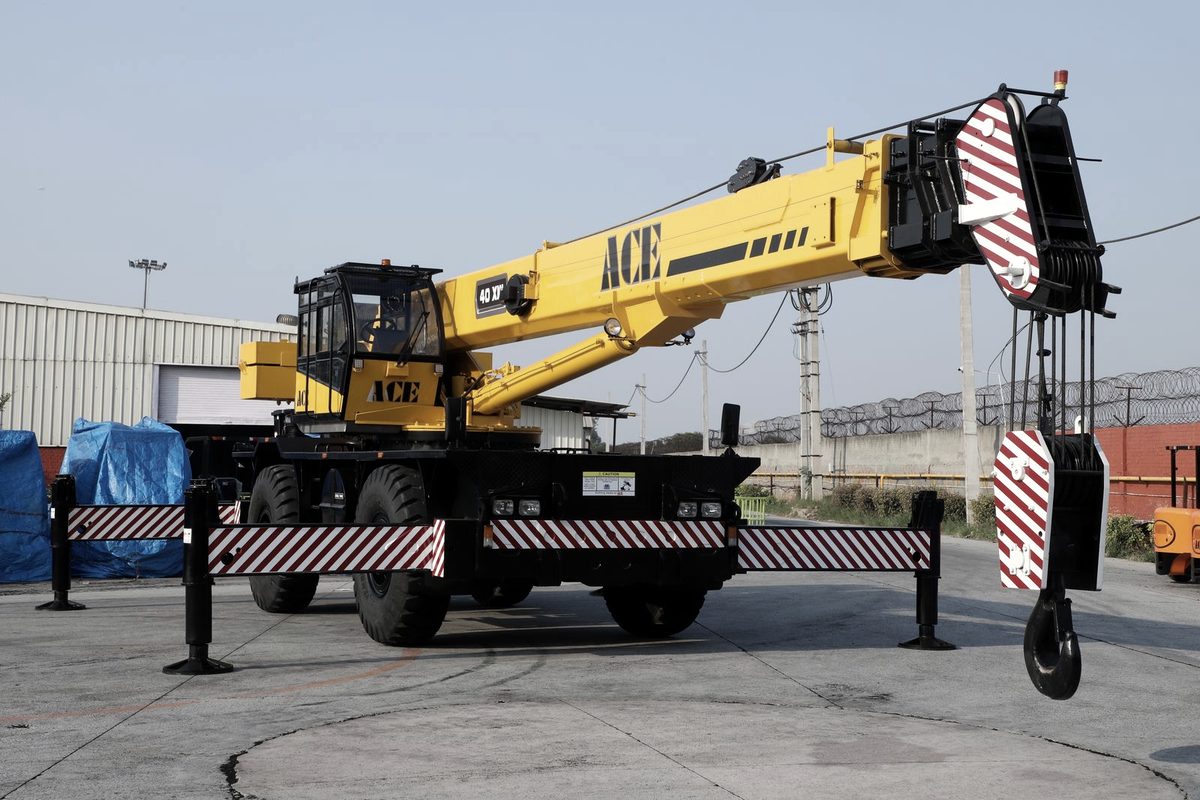
The boom, the counterweight, and the outrigger pads come off first, and on a crawler crane the upper works separate from the tracks as well. How far the breakdown goes depends on the crane and the move: a smaller rough-terrain or all-terrain crane traveling a short distance between jobs might retract its boom, pin the sections, and roll on its own wheels with counterweight left on; a large crawler crane moving any real distance comes apart almost entirely, because its working weight with full counterweight and a long boom is nowhere close to what any single trailer can carry.
The sequence for a full breakdown generally runs:
- Boom sections. A lattice boom pins apart at each section joint; a telescopic boom retracts fully and may still need its top section pinned off if it is still too long for one trailer. Each section needs its own cradle or support points — it is built to carry load along its axis during a lift, not to rest unsupported across two trailer bunks.
- Counterweight. Slabs pin or bolt off the counterweight carrier one at a time and get stacked and secured on their own trailer or trailers — covered on its own below, because it is rarely a minor step.
- Outrigger pads and float pontoons. The floats, pads, or box-type outriggers that spread the crane's ground pressure during a lift unpin and ship as a separate load — not large individually, but heavy and numerous enough to usually fill a trailer of their own.
- Jib, if fitted. A luffing or fixed jib comes off and travels as its own piece, pinned and cradled like a boom section.
- Upper works and undercarriage (crawler cranes). The house and boom base lift off the tracks entirely on the largest machines, and the tracks or full undercarriage become their own load. On a wheeled mobile or all-terrain crane this step does not apply — the carrier drives itself, with the stripped-down superstructure riding on it.
Every pin pulled gets logged — which section, which hole, which orientation — because reassembly only goes fast when nobody is guessing which end of a boom insert faces up.
Why does counterweight ship as its own freight?
Because it is dead steel with no function except ballast, and that makes it the single heaviest, least structurally awkward thing on the crane to pull off and load separately — so it is also usually the first thing that comes off and the thing that largely determines how many trailers the move needs. On a large crawler crane, full counterweight can run to a meaningful fraction of the machine's total operating weight, stacked as individual slabs so they can be added, removed, or reconfigured for a given lift's radius and capacity. That same modularity is exactly what makes it simple to strip for transport: no hydraulic line to disconnect, no structural joint to protect, just slabs and the pins or bolts holding them to the carrier and to each other.
Counterweight is also where the biggest weight-per-load decision in the whole mobilization happens. Stack too much on one trailer and the load is legal on paper but sits wrong on the deck — too high, too far back, or too concentrated over one axle group. Most moves split counterweight across two or more loads specifically to keep each one's axle distribution clean, even when a single trailer could technically carry the total tonnage. That split is a rigging and load-planning decision made before anything leaves the yard, not something worked out at the scale house.
How many loads does it take to move a crane?
However many it takes to keep every individual piece's weight, length, and width inside what a trailer and a route can carry — and on anything past a mid-size machine, that number is rarely fewer than four or five. The crane's total operating weight is not the number that matters here; the number that matters is each component's weight on its own, because that is what gets planned against a trailer's deck rating and axle count. A large crawler crane's mobilization commonly breaks into a dozen or more individual loads once the boom is sectioned, the counterweight is split across multiple trailers, the pads go on their own flatbed, and the undercarriage travels separately from the upper works.
What decides the load count
- Each boom section or insert's individual weight and length, not the assembled boom's total
- How counterweight gets split across trailers to keep axle loading even, not just legal tonnage
- Whether the undercarriage and upper works travel separately or the carrier moves itself
- Outrigger pads and floats, which are rarely heavy individually but add up to a full load of their own
- Any component whose dimensions alone — length, width, or height — put it outside what a given trailer or route can carry, independent of weight
That last point is worth being plain about: how any single load is cleared to travel is the crane owner's and the carrier's call, not the rigging crew's. What the breakdown plan owes the carrier is a clean, confirmed weight and dimension on every load — not a guess.
What does the receiving site need ready before anything arrives?
Ground that will actually hold the crane once it is reassembled, a laydown area big enough to build it, and a crew and the right crane or gantry on site to put it back together — all three, before the first trailer rolls in. A crane that arrives to a site that is not ready sits as disassembled steel on rented trailers, which is the most expensive way for a crane to spend a day, so the receiving checklist gets confirmed days ahead, not when the trucks are already inbound.
- Ground bearing capacity. Crawler cranes distribute weight over tracks and still need the ground under the final setup location checked, not assumed — soft or recently backfilled ground that looks fine will not necessarily carry the machine once it is built and loaded. Mats or dunnage get staged ahead of time if the ground can't be confirmed.
- Laydown and swing room. Reassembly needs flat, clear ground to lay out boom sections in build order, room to swing a section into the pin holes, and clearance for whatever picks counterweight back onto the carrier. Laydown space scattered across three areas turns a one-day rebuild into two.
- A crane or gantry for the rebuild itself. Something has to lift the boom base, set each section, and place counterweight back on — usually a second, smaller crane. That equipment and its crew need to be on site and ready, not booked for after the trucks arrive.
- Access for the loads themselves. Gate width, turning radius, overhead lines, and a route in from the public road that each trailer can actually run, checked against each load's real dimensions, not the crane's folded-up footprint.
- The assembly log from the teardown. Pin positions, section order, and torque specs travel with the load on paper, not in one rigger's memory, so a crew rebuilding a crane it did not take apart is not guessing which insert goes where.
How does a crane get reassembled and function-checked after it arrives?
In reverse order from the teardown — undercarriage or carrier first, upper works and boom base next, boom sections built out from the base, counterweight last — followed by a full function check before the crane picks anything for real. Building the boom out from the base rather than from the tip keeps each new section's weight supported on ground or by the assembly crane rather than cantilevered off a joint that was not designed to carry it unsupported, which is the same reason it came apart in that order going the other way.
Counterweight goes back in the order the manufacturer specifies for that model, and that order is not universal: some cranes need base counterweight in place before the boom goes up to stay stable through erection, while others take their final counterweight only once the boom is assembled. The assembly sequence in the manual is what decides it, not habit carried over from the last machine. Every pin that came out during teardown goes back in and gets checked against the torque or pin-retention spec, and any hydraulic or electrical connection that was broken to pull a section gets reconnected and bled or tested before it carries load.
The function check that follows is not a formality: boom raise and extension through its full range with no load, outrigger or track function on firm ground, swing in both directions, and the load moment or anti-two-block system confirmed working — all of it with nothing on the hook, before the crane picks anything for real.
Who plans the breakdown and who moves the loads?
They are two different jobs, and keeping them separate is what makes a mobilization go on schedule. Planning the breakdown — which sections pin apart, how the counterweight splits across loads, what each piece weighs and measures, and what the receiving site needs ready — is rigging work: engineering and sequencing, done by the people who will also be the ones putting the crane back together. Moving the resulting loads from one yard to the next is freight, arranged load by load through our licensed broker and carrier partners once the weights and dimensions are known. Clearing any individual load to travel is a carrier and equipment-owner matter, not part of the rigging scope. The crane work that follows on either end — the lift the crane is being mobilized for in the first place — is what crane services and the broader project freight planning around a job are actually built to carry.
Treat mobilization as a side detail and it is where schedules slip — a crane sitting half-built because the laydown area was full of someone else's material, or a boom section stuck at a gate it was never measured against. Treat it as its own planned job, with the breakdown sequenced, the loads sized correctly, and the receiving site confirmed ready, and the crane shows up in pieces and starts lifting on schedule.