A forklift can load a machine when its derated capacity, calculated at the load's real center of gravity, clears the weight with margin and the machine has clean pick points. A crane takes over when the derated number falls short, there is no safe fork access, or a tall load tips before it exceeds capacity. The plate rating is never the deciding number — the derated one is.
The forklift on site is rated for a certain capacity. The machine on the truck weighs less than that rating. Somebody does the math, calls it a forklift job, and forty minutes later there is a tipped-over forklift with a machine hanging off one fork and a very bad afternoon ahead. The rating on the plate was never the number that mattered.
Forklift capacity plates are written for a pallet — a compact load with its center of gravity a fixed, short distance out from the face of the forks, usually 24 inches. A machine is not a pallet. It is long, it is uneven, and its center of gravity can sit two or three times farther out than the plate assumes. Push the center out and the forklift's real capacity drops, sometimes by half or more, well before you reach the number stamped on the mast. Getting that math wrong is the single most common reason a load-out that should have been routine ends up as an incident report.
What is load-center derating and why does it matter?
Load-center derating is the drop in a forklift's safe lifting capacity as the load's center of gravity moves farther out from the forks than the standard distance the rating was calculated at. A forklift is a lever with the front axle as the fulcrum — the counterweight over the rear axle balances the load on the forks, and that balance only holds at the load center the truck was rated for. Move the weight out past that point and the truck needs proportionally less load to tip forward over its front wheels.
The plate on the mast typically shows one number at one load center — say, a rated capacity at 24 inches. Most trucks also carry a derating chart, or the manufacturer can supply one, showing capacity at longer centers: 36 inches, 48 inches, 60 inches. On a genuinely long machine — a horizontal boring mill, a long-bed CNC, a press brake — the real load center can land past the end of that chart entirely, and at that point the honest answer is that the truck is not rated for the pick at all, whatever the plate says.
The failure mode is not gradual. A forklift that is overloaded for its actual load center does not creep forward — it tips, forks first, the instant the load clears the ground and the rear wheels lose their grip on the pavement. There is no warning stage.
How do you find the actual load center on a machine?
By locating the true center of gravity, not the geometric middle of the crate or skid. Machines are never weighted evenly — a lathe's headstock end is heavier than its tailstock end, a compressor package carries most of its weight over the motor and air-end, a press has its mass low and to one side of the bed. The nameplate weight is a start; the center of gravity is a separate figure, and on anything irregular it needs to be measured or pulled from the manufacturer's rigging data, not eyeballed off the crate.
Once the center of gravity is known, the load center for forklift purposes is the horizontal distance from the face of the forks (or the heel of the load once it is on the truck) out to that center. That is the number you take to the derating chart — not the machine's total length, and not the distance to the far end of the crate.
What has to be confirmed before a forklift touches the load
- Actual weight from the data plate or manufacturer spec sheet, not an estimate
- Center of gravity, and the resulting load center once the machine sits on the forks
- The truck's rated capacity at that load center, from its derating chart — not the plate figure
- Fork length long enough that the load is fully supported, not overhanging the tips
- Solid, accessible pick points under the frame or skid, not the housing, panels, or piping
- Height and stability of the load once tilted back and raised — is it top-heavy on the forks?
When is a forklift the right tool for loading a machine?
When the derated capacity clears the weight with real margin, the machine has genuine fork pockets or a skid built to be forked, and the pick is a straight lift-and-set with nothing to clear overhead. That covers a large share of machine load-outs: skid-mounted compressors, packaged CNC machines with fork slots cast into the base, palletized or crated equipment, and anything that came from the manufacturer built to be handled by fork truck. High-capacity rigging forklifts exist specifically for this work and can move loads well beyond what a warehouse truck handles — but the same derating rule applies to those trucks too, just at a higher capacity.
A forklift load-out is also the faster, less disruptive option when it applies. No crane mobilization, no outrigger footprint to protect a slab, no overhead clearance to check, no street or lane closure. If the machine has clean pick points and the numbers pencil out with margin, that is usually the answer.
When does the job need a crane pick instead?
When the derated capacity does not clear the weight at the real load center, when there is nowhere safe to put a fork under the load, or when the pick has to go up and over something a forklift cannot reach. Specific cases that push a job to a crane:
- The load center is too far out. A long machine with its mass concentrated at one end — the classic horizontal mill or long shaft — can derate a forklift's capacity below the actual weight even when the truck's plate rating looks comfortable on paper.
- There are no real pick points. A machine with a fabricated base, exposed piping, a cabinet skirt, or a housing that extends below the frame gives the forks nothing solid to sit under. Forcing forks under the wrong surface risks the machine, not just the lift.
- The load is tall and narrow. Anything top-heavy tips on the forks before it exceeds capacity. A forklift raises and tilts the mast; a load with a high center of gravity relative to its footprint can rock or slide off before the truck ever approaches its rated weight.
- The pick has to clear an obstruction. Loading over a truck's headboard, lifting through a roof opening, or setting a machine down inside a building past racking or piping a forklift cannot drive around — that is a vertical, controlled pick, which is what a crane or gantry is built for.
- There is no ground for a forklift to work from. Loose yard surface, a container floor rated for rolling loads but not a loaded fork truck, or a site with no clear path for the truck to approach the load square.
A crane pick also puts an engineered lift plan, sized rigging and a signal person between the load and the ground, which a forklift job does not carry by default. On anything approaching a truck's derated limit, that margin is worth more than the time saved.
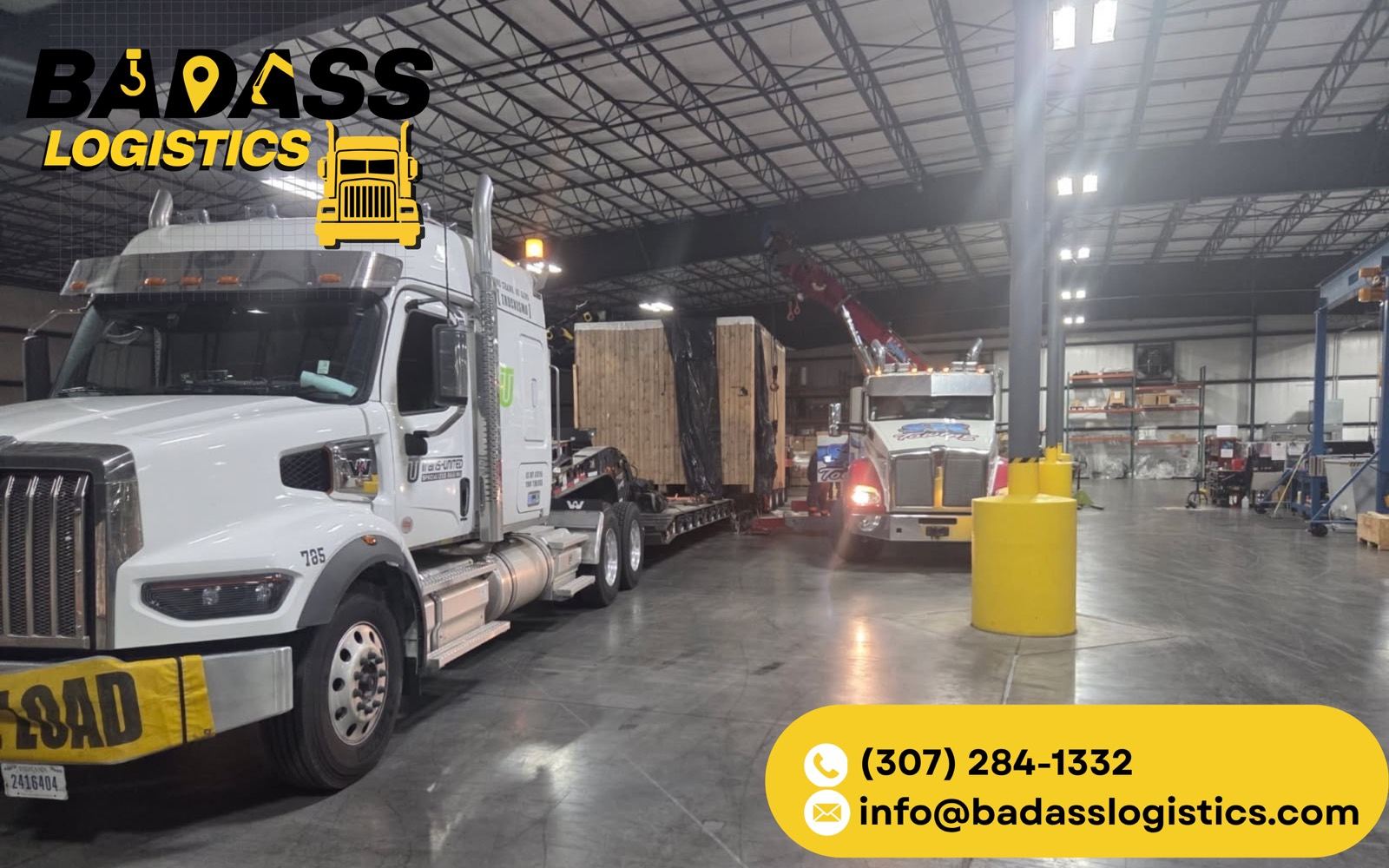
What does a gantry change in the decision?
A gantry sidesteps the derating problem entirely by lifting from directly overhead instead of from one side. Because the load hangs from a beam spanning two support legs rather than balancing on a fork, there is no counterweight lever and no load-center calculation the way a forklift needs one — the gantry's rated capacity applies at the hook regardless of where the machine's center of gravity sits underneath it. That makes a gantry the answer for a load that is too long or too off-center for any forklift but does not need the reach or mobility of a full crane pick — moving a machine off a trailer inside a building, for instance, where there is headroom but no room to swing a crane boom.
The tradeoff is setup and footprint. A gantry has to be assembled, positioned, and often walked or rolled with the load, which takes longer than driving a forklift under a skid. It earns its place specifically on the loads that sit in the gap between what a forklift can safely take and what needs a full crane mobilization.
Does the trailer or dock change which one you need?
Yes — a forklift load-out that pencils out fine from a dock can fail entirely from ground level, and the reverse is also true. Loading from a raised dock lets a forklift drive straight onto a flatbed or into a container at the same height, which is the easiest version of the job. Loading at ground level, off a step-deck or lowboy with no dock, means the forklift is either driving up a ramp with the load raised — which changes the tip geometry — or the load has to be picked from the side, which is exactly the scenario a crane or gantry handles more safely. A container floor is its own limit again: most are rated for a distributed rolling load, not a loaded rigging forklift's point loading, and that rating has to be checked before the truck ever drives in.
None of this changes by guessing. A short site walk that confirms dock height, ground surface, container or trailer rating, and the route in and out settles the forklift-or-crane question before equipment shows up, which is cheaper than settling it after.
Bottom line
- The forklift's plate rating is calculated at a standard load center. A machine's real load center is almost always farther out, and that is what derates the truck.
- Find the actual center of gravity, not the geometric middle of the crate, then check the derating chart at that distance — not the plate number.
- A forklift works when the derated capacity clears the weight with margin and the machine has real, accessible pick points.
- A crane, or a gantry for the loads in between, takes over when the load center is too far out, there is nowhere to fork, the load is top-heavy, or the pick has to clear something overhead.
- Dock height, ground surface, and container or trailer floor rating decide as much as the machine's own weight does.
Send the machine's weight, dimensions and a photo of its base and we will tell you whether it is a forklift load-out or a pick, and size the crew accordingly. That covers loading and unloading and crane service under one plan, with transport between sites arranged through our licensed broker and carrier partners. Start here.