Project cargo is large, high-value, usually multi-piece freight tied to a capital project — plant builds, energy equipment, process vessels. Unlike standard freight, it has to be engineered before it's booked: route surveys, state-by-state permits, specialized trailers, rigging at both ends, and a delivery sequence dictated by the install schedule. One coordinator owns the whole chain from drawing to final set.
Ask ten people in freight what project cargo is and you'll get ten answers. From the dispatch desk, the definition is simple: project cargo is any shipment that has to be engineered instead of just booked. It's the big, heavy, high-value, usually multi-piece freight tied to a capital project — a plant build, a substation, a mine expansion, a refinery turnaround — where the cargo, the route, the equipment, and the delivery order all get planned as one program.
Standard freight lives inside the legal envelope: roughly 8'6" wide, 13'6" tall, about 53' of trailer, and 80,000 lbs gross vehicle weight. You book a truck, it loads, it delivers. Project cargo breaks that model in at least one direction — a single piece that blows past the envelope, or forty pieces that only work if they arrive in the right sequence.
What actually qualifies as project cargo
- Energy equipment — turbines, generators, transformers, wind tower sections, nacelles
- Process equipment — pressure vessels, reactors, columns, boilers, heat exchangers
- Heavy machinery — presses, crushers, mills, kilns, complete production lines
- Fabricated structures — bridge girders, modular skids, pre-assembled pipe racks, storage tanks
Size isn't the only trigger. A plant relocation that fills forty trailers is project cargo even when most loads are legal-dimension, because the machining centers have to land before the walls close in and the press line has to arrive in install order. The moment sequencing matters, you've left standard freight territory.
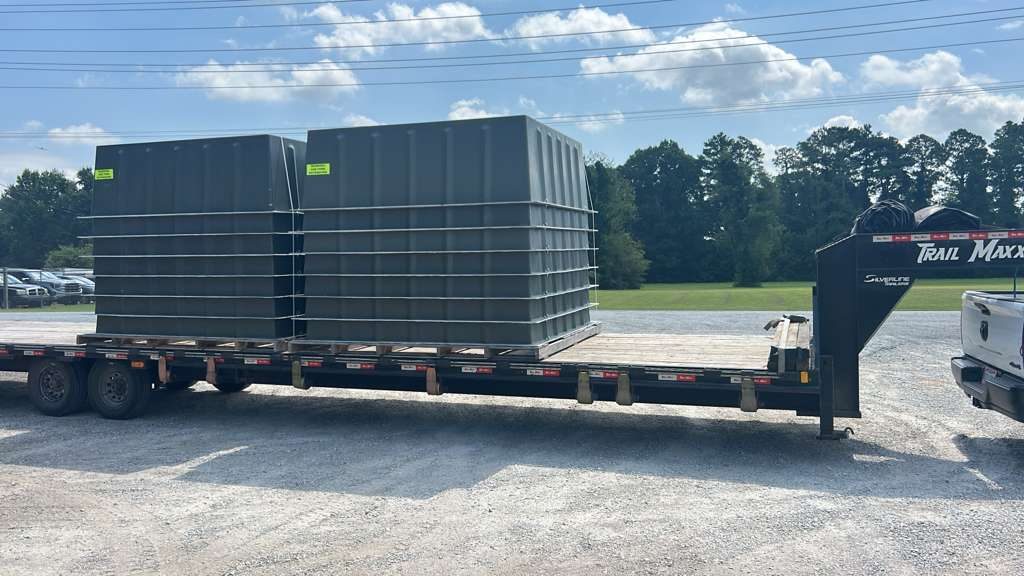
Five things that separate it from standard freight
1. Engineering comes first. Before any truck gets booked, someone verifies the piece's weight, dimensions, and center of gravity against deck ratings and axle spacing. Overweight loads trigger axle-loading calculations. The heaviest moves can require engineered bridge reviews in some states. Lift plans get drawn for both ends before a wheel turns.
2. The equipment is specialized. RGNs, multi-axle lowboys, stretch flatbeds, hydraulic platform trailers, dolly systems — the trailer is chosen off the drawing, not off what's parked nearby. A tall vessel that clears on a double-drop won't clear on a standard flatbed, and an overweight load may need extra axles just to spread the footprint legally.
3. Permits and escorts rule the calendar. Every state issues its own oversize/overweight permits with its own approved routes, curfews, escort rules, and travel windows. Tall loads can require a height pole car and utility crews to lift wires. Permits get sequenced across every state on the route — one denial or route restriction can reroute the entire move.
4. Multiple modes, one plan. The heaviest piece may ride barge or rail while everything else runs over the road, with a laydown yard and a crane transfer in between. Every mode change is its own rigging job with its own lift plan.
5. Rigging is part of the shipment, not an afterthought. Pieces get disconnected, skated out of buildings, lifted, blocked, and secured at origin — then set by crane or gantry at destination, often into a scheduled window the installation crew is standing by for. A late piece doesn't just cost a delivery date; it idles millwrights and crane time.
How an end-to-end move gets coordinated
It starts with data: verified dimensions, weights, drawings, and center-of-gravity marks for every piece — not estimates off a spec sheet. Then the route survey, which for the biggest pieces means physically driving the route, measuring bridge clearances, and checking turn radii at every interchange. Equipment gets matched to each piece, permits get filed state by state, and escort and utility work gets scheduled around curfews and travel windows.
Then execution: rigging crews load out at origin, trucks run their permitted windows, and the destination crane sets each piece in install order. The value of a single coordinator — the heavy haul and brokerage role — is that carriers, riggers, permit services, and the site schedule all answer to one plan. When the schedule moves, one desk re-sequences everything instead of five vendors pointing at each other.
What drives the cost
No two project moves price the same, but the drivers are consistent: how far the piece exceeds the legal envelope (which dictates axle count, permits, and escorts), how many states the route crosses, whether bridge engineering or route modifications are required, the crane and rigging scope at both ends, laydown or storage between modes, and how compressed the schedule is. Weight and width cost money. Surprises cost more. The cheapest project move is the one measured correctly the first time.
Bottom line
- Project cargo is freight that has to be engineered, not just booked — oversized, overweight, high-value, or sequence-critical multi-piece moves.
- Anything past 8'6" wide, 13'6" tall, ~53' long, or 80,000 lbs gross leaves standard freight and enters permit territory.
- Permits, escorts, route surveys, and rigging windows drive the schedule — start with verified dimensions and weights, not estimates.
- One coordinator owning carriers, riggers, and permits end to end is what keeps a forty-load program on sequence.
Planning a plant build, equipment install, or multi-piece industrial move? Start with the drawings and get a quote — or if your load fits on a single trailer, read our guide on shipping industrial machinery on a flatbed.