To ship large industrial machinery on a flatbed: pick a trailer that keeps the load under 13'6" tall (flatbed, step deck, or RGN), center the weight over the axles, block and brace against movement in every direction, strap or chain to the load's rated points, tarp against weather, and permit any dimension over legal limits before the wheels turn.
A CNC machine, a dust collector the size of a truck, a transformer, a fabricated skid — sooner or later it has to leave the plant on a truck. Flatbed shipping is how most oversized industrial equipment moves, and the difference between a clean delivery and a wrecked machine is all in the prep. Here is exactly how our crews put a big, heavy, awkward load on a deck and get it there legal and intact.
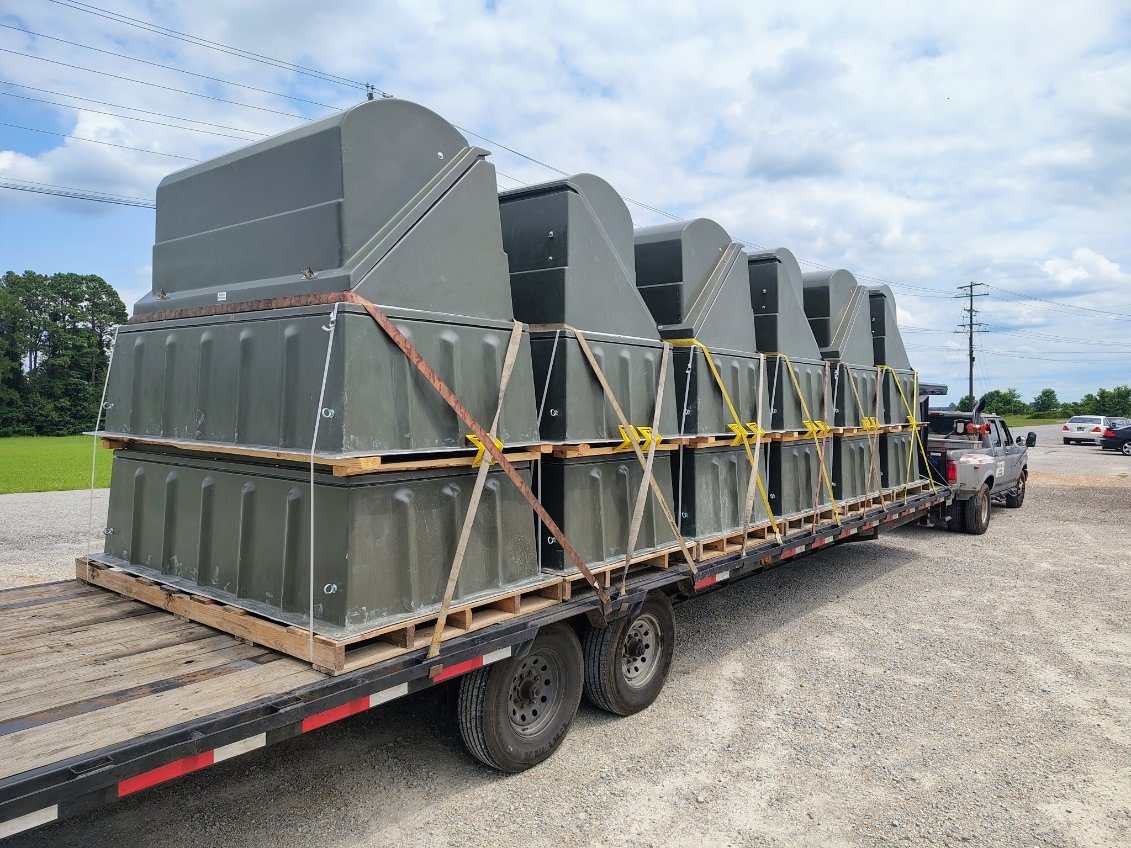
1. Spec the right trailer
Trailer choice comes down to two numbers: height and weight. A standard flatbed sits about five feet off the ground, so anything much over 8'6" tall on a flatbed blows past the 13'6" legal height. Drop to a step deck and you gain roughly a foot of legal height; drop to an RGN (double-drop) and you gain several feet in the well for the tallest machines. Heavier than a standard axle setup can legally carry? Now you are into multi-axle RGNs and weight permits. We match the deck to the load — see flatbed vs step deck vs RGN for the full breakdown.
2. Build the load plan before anything moves
Where the machine sits on the deck is not eyeballed. The weight has to sit over the trailer axles to stay within axle limits, with the center of gravity low and centered so the rig tracks straight. For an off-center or top-heavy machine, that plan also decides where the blocking goes and which tie-down points carry the load. Get it wrong and you either overload an axle or watch the load shift on the first hard brake.
3. Block, brace, and cradle
Securement starts with stopping movement in every direction before a single strap goes on. That means hardwood dunnage under and around the load, chocks and cleats nailed to the deck, and cradles for anything round or tippy. Crated machinery rides on its skid; uncrated machinery gets bearing points that match its frame — never its sheet metal.
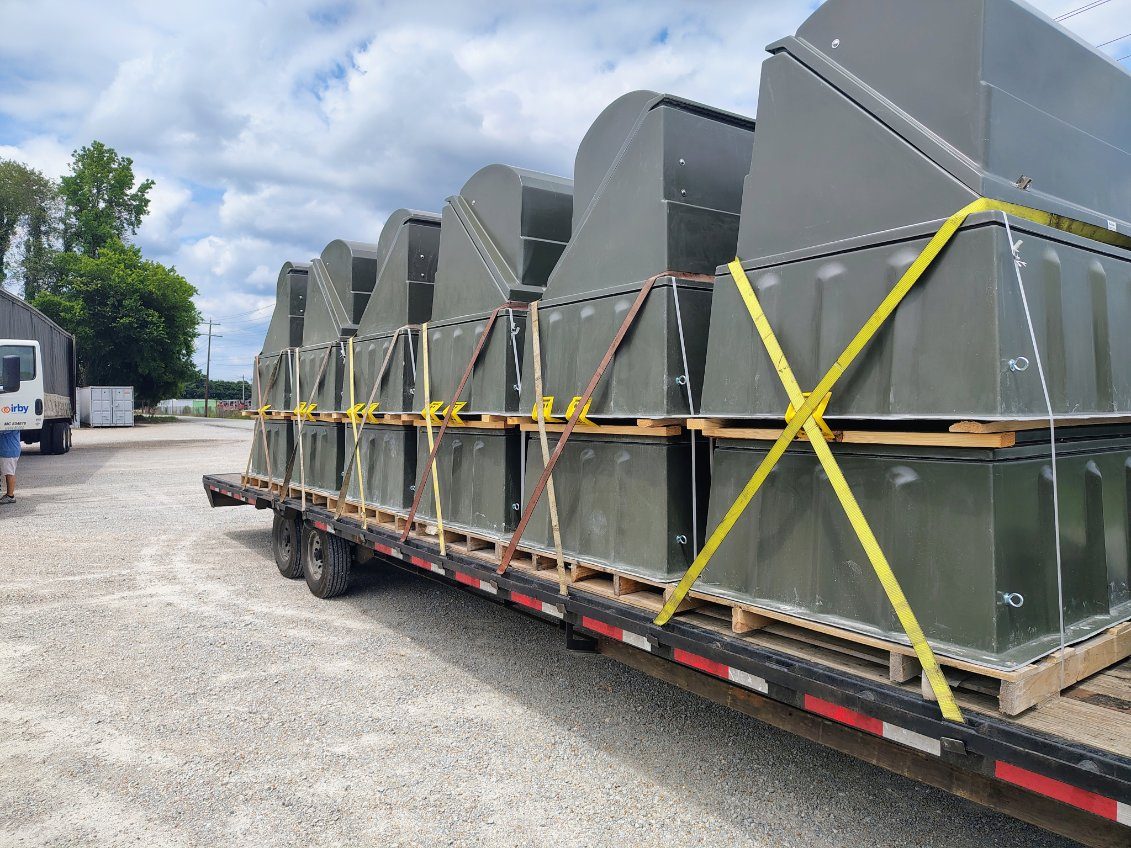
4. Strap or chain to rated points
Federal cargo-securement rules set the floor: total tie-down capacity has to be at least half the cargo weight, and heavy machinery needs tie-downs rated for the job. Straps handle crated and lighter loads; chains and binders handle heavy iron and anything that has to be pinned hard to the deck. Tie to the machine's engineered lift and lash points or its skid — never over a control panel, a casting, or thin sheet metal. Edge protectors keep straps from cutting on sharp corners.
5. Tarp and mark it
Weather-sensitive equipment gets tarped or shrink-wrapped — electronics, machined surfaces, and painted housings do not travel naked through road spray and grit. If any dimension crosses a legal limit, the load also gets OVERSIZE LOAD banners, flags, and lights, with the exact marker requirements riding on the permit.
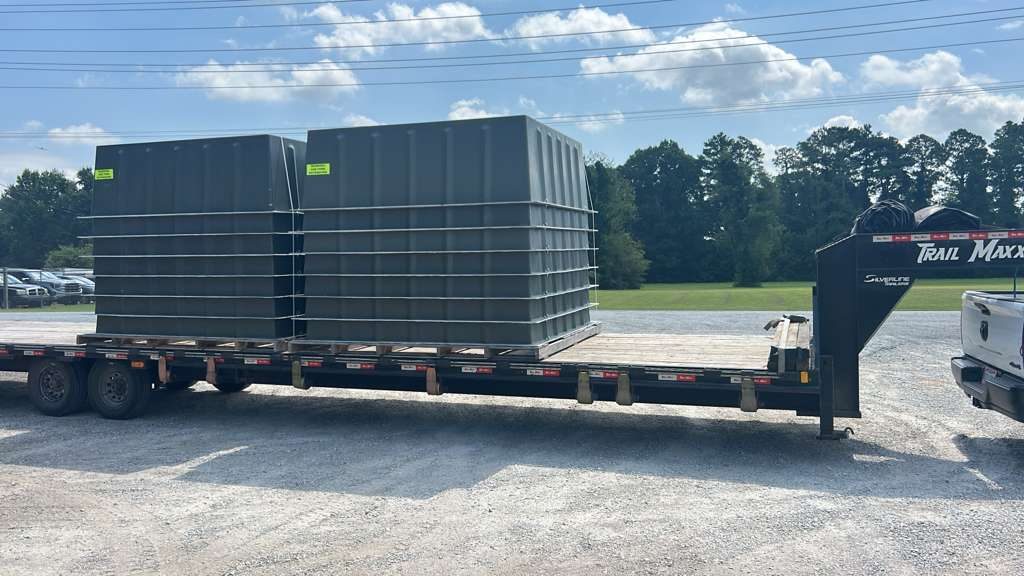
6. Permit the load and survey the route
Anything over 8'6" wide, 13'6" tall, about 53' long, or 80,000 lbs gross needs a permit in every state it passes through, and wide or tall loads may need pilot cars. The route gets surveyed for low bridges, weight-restricted roads, and tight turns before dispatch — the shortest line on the map is not always the legal one. We handle permitting and escorts as part of the move; here is how oversize permitting actually works.
Bottom line
- Trailer is chosen by height and weight — flatbed, step deck, or RGN.
- Weight rides over the axles; the load plan comes before the load.
- Block and brace first, then strap or chain to rated points.
- Tarp the sensitive stuff; permit and survey anything oversized.
Have a machine that needs to move? This is exactly what our machinery moving and heavy haul crews do every week. Send the dimensions, weight, and a photo and we will spec the trailer and quote the lane.