A superload is a load that exceeds a state's routine oversize/overweight permit envelope — commonly around 16 feet wide, 16 feet high, or 200,000 pounds gross, though every state draws its own lines. It requires individual bridge analysis, a physical route survey, escorts (often police), utility coordination, and weeks to months of lead time.
Every state will sell a routine oversize permit in minutes through an online portal. A superload is the freight that breaks that system. The state stops auto-issuing and starts reviewing — your specific load, your specific trailer, every specific bridge on your route. That's the working definition from the dispatch side: a superload is any load big enough or heavy enough that an engineer has to approve it before it moves.
Legal, Oversize, Superload: Three Tiers
Standard legal freight in the US tops out around 8'6" wide, 13'6" tall (14' across much of the West), a 53' trailer, and 80,000 lbs gross vehicle weight. Cross any one of those numbers and you need an oversize or overweight permit.
Most permit loads live in the second tier. States publish pre-approved envelopes — dimension and weight limits under which permits issue automatically, often the same day. A 12' wide excavator on an RGN is paperwork, not a project.
A superload exceeds the routine envelope. Every state draws its own line, but common triggers sit around 16' wide, 16' high, or 200,000 lbs gross, with length thresholds that vary widely. The same transformer can be a routine permit in one state and a superload in the next — and since permits issue state by state, the strictest state on your route sets your schedule.
Bridge Analysis: Why the Engineering Comes First
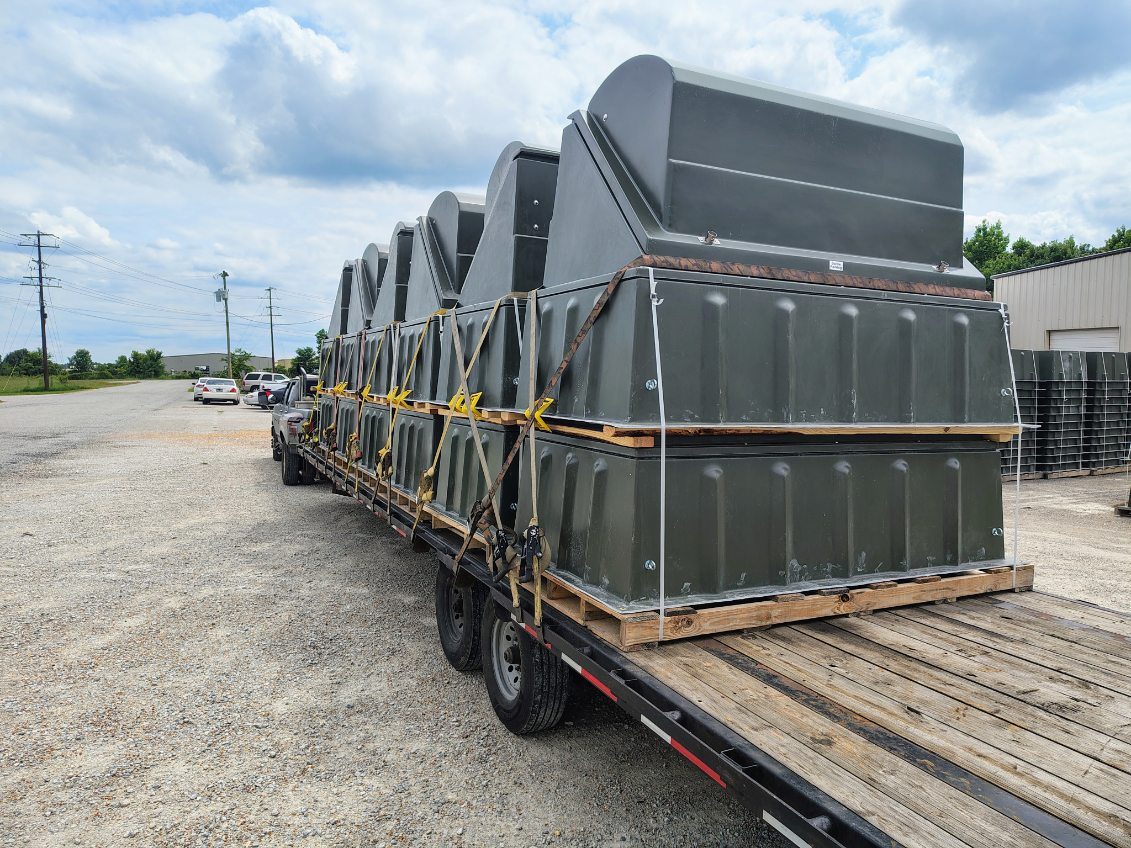
Gross weight isn't what breaks bridges — concentrated weight is. State bridge engineers model your exact axle configuration — axle count, spacing, weight per axle — against every structure on the proposed route. That analysis is why superload trailers get long: 13-axle stretches, 19-axle perimeter frames, dual-lane transporters that put two full trailer widths under one load. The goal never changes: spread the weight until no single point exceeds what the span was built to carry.
Sometimes the answer comes back conditional — cross this bridge alone, centered on the deck, at walking speed, traffic held at both ends. Those conditions get written into the permit, and police enforce them on move day.
The Route Survey
Before the application goes in, someone physically drives the route. Not a map app — a truck with a height pole. The survey documents:
- Vertical clearances — overpasses, sign gantries, traffic signals, and every wire crossing the road
- Horizontal pinch points — bridge rails, work zones, medians, toll plazas
- Turning geometry — whether a long combination can actually make the ramp, the roundabout, the plant gate
- Obstructions that have to move — signals on span wires, signs, low limbs
Many states require the survey report with the superload application. Skip it and you find the 15'9" wire at 2 a.m. with a 16'4" load under it.
Permits: Individual Review, Not Auto-Issue
A superload permit is an engineering submission, not a form. The application routes through the permit office, the bridge division, sometimes district maintenance — and they review that one load on that one route. Dimensions lock to the permit; change the trailer or add a foot of height and the review starts over. Multi-state moves multiply all of it, because each state runs its own review on its own clock. Our oversize load permits guide covers the routine tier — superloads sit above everything in it.
Escorts, Police, and Utility Crews
Routine oversize loads take pilot cars. Superloads take a convoy:
- Escort vehicles front and rear, with a height-pole car running ahead of anything over-height
- Police escorts, mandatory in most states above certain dimensions or on certain routes — scheduled around agency availability, which you don't control
- Utility crews to lift or de-energize power, phone, and cable lines, and to swing traffic signals out of the way and reinstall them behind the load
- Travel windows — daylight-only on rural stretches, night-only through cities, no weekends, no holidays, full stop for weather
Utility coordination is what blows schedules. Every power company, telecom, and municipality schedules its own crews, and a route with forty wire lifts needs forty commitments that all hold on the same day.
Lead Times: Weeks to Months
A routine oversize permit issues in minutes to days. A superload runs weeks to months, driven by the number of states crossed, the number of bridges requiring individual analysis, utility and police scheduling, and seasonal restrictions — northern states impose spring-thaw weight limits that can close routes for weeks. None of it compresses well. The best move a shipper can make is bringing the transport team in while the load is still on the drawing board: shipping in two sections, dropping deck height, or relocating lift points can knock a move down a full permit tier.
Bottom line
- A superload exceeds a state's routine oversize/overweight permit envelope — commonly around 16' wide, 16' high, or 200,000 lbs gross, but every state sets its own thresholds.
- Superload permits are individually engineered: bridge analysis on your exact axle configuration plus a physical route survey.
- Plan for police escorts, utility line lifts, restricted travel windows, and weeks-to-months lead times — the strictest state on the route sets the schedule.
- Involve the transport coordinator before the load is built; a design change is easier than a route change.
If you have a drawing with 16' of anything on it, start the conversation now — not when it ships. We coordinate superload moves end to end: engineering, permits, surveys, escorts, and the carriers and rigging crews that run this class of equipment every week. See our heavy haul transport page or get a quote.