Most skid steers weigh 5,000–9,000 lbs and ship legal on a flatbed, step deck, or equipment trailer — no permits. Load it drive-on, lower the bucket or attachment to the deck, set the parking brake, and chain the four designated tie-down points with a combined rating of at least half the machine weight. Bulky attachments ride separately.
A skid steer is about the easiest piece of heavy equipment to ship — compact, self-loading, and almost always inside legal dimensions. That said, "easy" still means the right trailer, real chains, and a plan for the attachments. Here's how it goes from the dispatch desk.
Weight and size: usually legal
Most skid steers run 5,000 to 9,000 pounds, and compact track loaders a bit more. At that weight and size they ship inside the legal envelope — 8'6" wide, 13'6" tall, 80,000 lbs gross combined — so no permits, no escorts. The two things that change that math: a wide bucket or attachment that pushes past 8'6", or a large track loader that runs heavier and wider than a standard skid steer. Measure the actual machine with whatever's mounted on it.
Trailer and loading
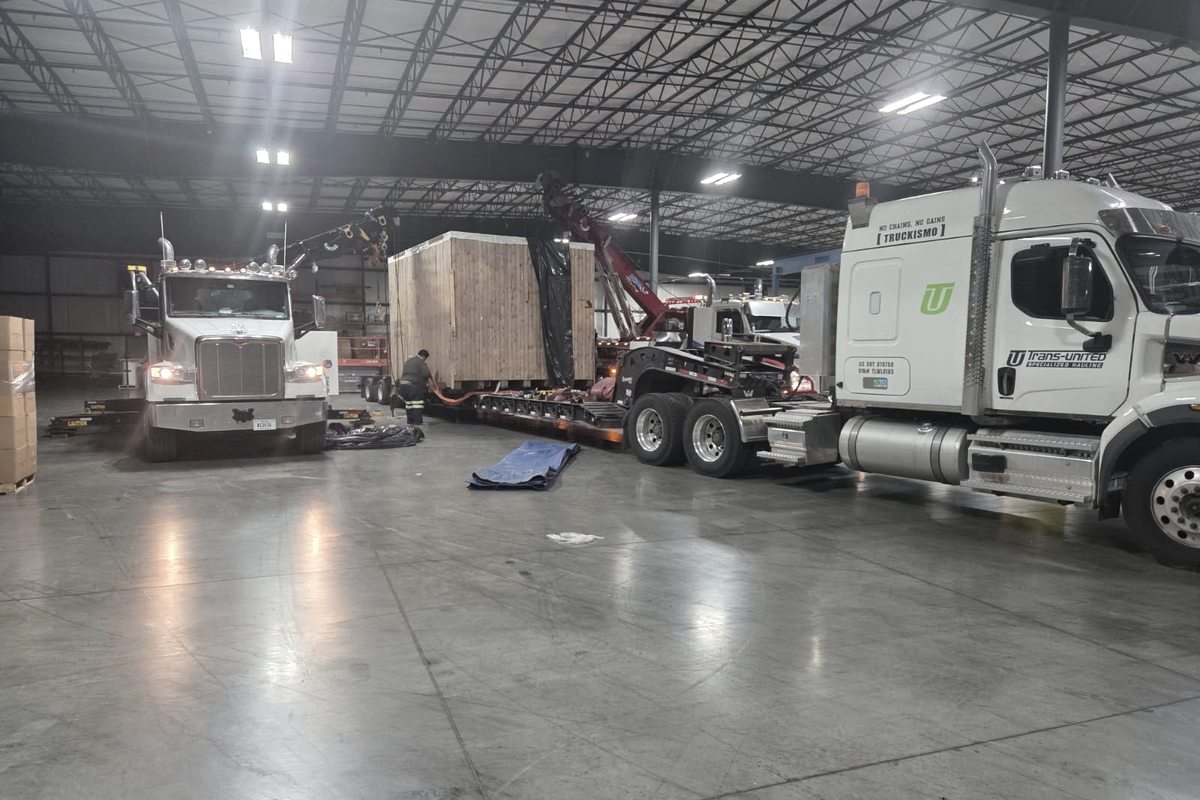
A flatbed, step deck, or dedicated equipment trailer all work. A running machine drives on from a dock or up ramps rated for the weight; a dead machine gets winched or craned. Keep the machine centered over the trailer's axles so the weight sits where it belongs.
Securement: four points, chains to the frame
Federal securement rules treat equipment over 10,000 lbs as its own category, but even lighter skid steers ride the same way: a minimum of four chains to the machine's designated tie-down points, with combined working load limit of at least half the machine weight. Lower the bucket or attachment flat to the deck, set the parking brake, and lock the lift arms. Chains go to frame points — never over the loader arms or across hydraulic lines. This is the same discipline we run when shipping an excavator.
Attachments
The machine and its attachments are two different loads. A standard bucket rides flat and chained. Bulky or over-width attachments — mulching heads, snow pushers, grapples, augers — come off and ship separately, secured on the deck, so they don't blow the width limit or work loose in transit.
Bottom line
- Most skid steers are legal freight — flatbed, step deck, or equipment trailer, no permits.
- Drive it on, lower the attachment, set the brake, chain the four frame points.
- Wide attachments and large track loaders can push width — measure before booking.
- Attachments ship separately, secured on the deck.
Shipping one skid steer or a fleet? It's core machinery moving and heavy haul work — get a quote with the model and any attachments.